
Table of Contents
- Quick Comparison: Where to Find Authentic Vintage Style Band Merchandise
- How to Identify Vintage Band T-Shirts: Single Stitch, Tags, and Prints
- Where to Buy Authentic Rock Shirts: Retailers, Marketplaces, and Reissues
- Rare and Collectible Concert Tees Worth Hunting For
- Officially Licensed Merchandise vs. Bootleg Prints
- Caring for Vintage Band Merchandise: Washing, Storage, and Preservation
- Sizing and Fit: What to Expect from Vintage and Vintage-Style Tees
- Conclusion
- Frequently Asked Questions
Last Updated: September 12, 2026
Quick Comparison: Where to Find Authentic Vintage Style Band Merchandise
Shopping for authentic vintage style band merchandise means choosing between original tour shirts, licensed reissues, and fashion reproductions, each with different trade-offs in price, authenticity, and wearability. This guide covers how to spot real vintage construction, where to shop, and how to keep a favorite shirt alive for decades.
The market splits into two camps: original tour-era garments and modern pieces built to look and feel like they came off a 1979 arena floor. Originals carry provenance; reprints carry consistency and a lower price.
| Source Type | What You Get | Typical Price Range | Best For |
|---|---|---|---|
| Original vintage (specialist dealers) | One-of-a-kind tour-era shirts | Varies by rarity | Serious collectors |
| Auction marketplaces | Rare finds, wide selection | $10 and up | Hunters who verify carefully |
| Licensed reissue brands | New shirts, vintage aesthetic | $40+ | Fans who want the look |
| Print-on-demand platforms | Affordable graphic tees | $25+ | Casual wear |
| Brand-direct vintage-inspired lines | Premium fabric, curated designs | Varies | Everyday classic rock fans |
Match the shirt to how you'll wear it: collectors preserve, fans wear.
How to Identify Vintage Band T-Shirts: Single Stitch, Tags, and Prints
Vintage band t-shirts from the 1970s through the early 1990s share construction details modern manufacturing rarely reproduces. Reading those details is the fastest way to separate a genuine tour-era garment from a clever reproduction. A complete check walks through five layers: stitch, tag, print, fabric, and provenance.
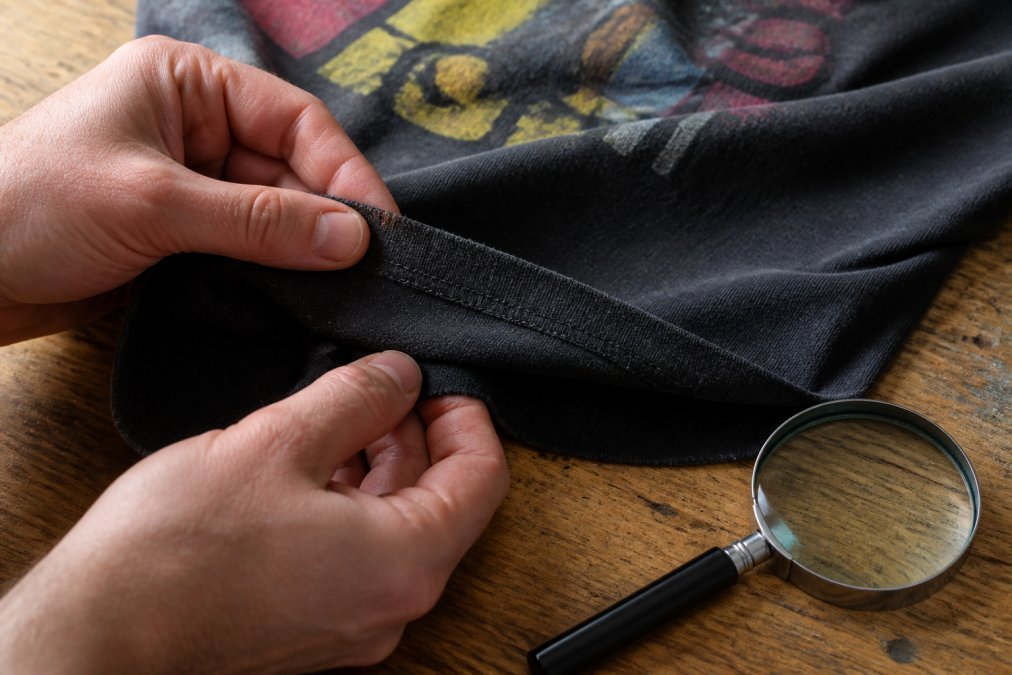
Layer 1: Check the Stitching, Single vs. Double Stitch
Single stitch means a hem finished with one visible line of stitching, standard on most shirts made before the mid-1990s. Double stitch, with two parallel lines, became the norm as manufacturing modernized. A shirt claiming 1978 origins but showing double-stitched hems deserves scrutiny.
Run your thumb along the bottom hem and sleeve cuffs and feel for one ridge or two, this check eliminates most fakes in seconds. A few late-1980s and early-1990s shirts were double-stitched at the factory, so treat double stitch as a prompt for more questions, not an automatic disqualifier.
Layer 2: Read the Tag and Copyright Dates
Original tags tell a story, and the tag era should match the shirt era. Patterns worth memorizing:
- Paper tags with a printed copyright symbol and year are common on 1970s and early-1980s shirts. The ink often fades or flakes.
- Woven damask tags appear frequently in the 1980s and early 1990s and feel thicker than modern printed labels.
- Screen-printed neck labels (no sewn tag at all) became common in the 1990s and are a useful era marker.
- Modern reprint tags glued or sewn onto a new blank are the most common fake signal. If the tag looks crisp, bright, and machine-perfect on a shirt sold as 40 years old, slow down.
A common mistake is trusting a reprinted tag without checking it against the shirt's construction, print style, and fabric weight. All four should tell the same story.
Layer 3: Inspect the Print Texture
Authentic screen print ink breaks down over decades, producing a soft, worn graphic that sits in the fabric rather than on top of it. Faded, cracked prints are expected. A perfectly crisp, glossy print on a shirt sold as 40 years old is a red flag.
Run a fingernail lightly across the graphic. Original ink feels embedded and slightly rough at the edges; modern heat-transfer and DTG prints feel rubbery and peel in sheets rather than crack in fine lines.
Layer 4: Weigh the Fabric
Period cotton is thinner, softer, and drapes differently than modern blanks. Hold the shirt to a light source: if it blocks light like a modern heavyweight tee, question the era claim. Original 1970s and 1980s cotton blends also show a slightly irregular weave when stretched gently.
Layer 5: Ask About Provenance
Provenance is the tiebreaker. Original receipts, tour programs, concert photos, or dealer documentation add confidence no construction check can replace. Serious dealers volunteer this; reluctance to share it is itself a signal.
Quick Red-Flag Checklist
- Double-stitched hem on a shirt dated before the mid-1990s
- Crisp, glossy print on a shirt sold as decades old
- Tag era that doesn't match the print style or fabric weight
- No interior tag photo offered on a high-value listing
- Seller who won't answer direct construction questions
Work through the five layers in order. Most fakes fail at layer one or two; the survivors usually fall apart at layer three.
Where to Buy Authentic Rock Shirts: Retailers, Marketplaces, and Reissues
Where to buy authentic rock shirts depends on whether you want an original or a faithful reproduction. Specialist vintage dealers and auction marketplaces serve collectors chasing originals; licensed reissue brands and brand-direct vintage-inspired lines serve fans who want the aesthetic without the fragility.
WyCo Vintage operates a curated inventory of authentic, one-of-a-kind concert tees and rock memorabilia spanning the 1960s through the 2000s. Their detailed condition reporting suits collectors who need to know exactly what they're buying. The trade-off is price, which climbs with rarity.
eBay remains the largest secondary market for rare vintage band shirts, with auction and Buy It Now formats plus buyer protection. Prices start as low as $10, but verifying authenticity falls on you, and the same shirt can sell for wildly different amounts depending on timing.
Authentic Band Merch provides officially licensed apparel across tank tops, hoodies, and t-shirts, focused on legendary acts. Licensing verification is the draw. The limitation is a narrower artist roster than a general marketplace.
For fashion-forward buyers, Sandro periodically releases curated, high-end vintage-inspired band t-shirts starting around $100, with premium fabric and limited seasonal runs. Amplified Clothing starts around $40 with distressed, vintage-style prints and official licensing for major acts, giving fans the worn-in look without original-vintage cost. Spreadshirt offers affordable, print-on-demand vintage-style designs from $25, though licensing varies by design.
U.S. Copyright Office guidance on licensing and reproduction is worth reviewing if you want to understand why official licensing matters when a design is reproduced.
Original Vintage vs. Vintage-Style Reprints
The core distinction is provenance: an original was printed and sold during or near the tour it commemorates, while a vintage-style reprint is a new garment designed to evoke that era. Neither is dishonest if labeled correctly; the problem is reproduction passed off as original, which is why the authentication checks above matter.
Rare and Collectible Concert Tees Worth Hunting For
Rare concert tees from the 1970s and 1980s command the most attention among collectors, especially single-stitch shirts tied to specific tour dates. Scarcity drives value: small runs for a single tour leg are hardest to replace, and the more a shirt says about when and where it came from, the stronger it holds up.
What Actually Drives Value
What makes a shirt collectible comes down to a few factors:
- Tour specificity: A shirt naming a specific date and venue beats a generic band logo. A shirt from a single-night stand is rarer than one from a full-season run.
- Era of construction: Single stitch and period-correct tags raise desirability. Shirts from the late 1960s through the mid-1980s sit at the top of the demand curve.
- Artist and genre: Classic rock, heavy metal, and early punk acts from the 1970s and 1980s anchor most collections. Hip-hop and alternative acts from the late 1980s and 1990s have grown steadily as that generation of fans reaches peak buying power.
- Condition: Faded prints are expected; holes, stains, and dry rot are not. Dry rot shows up as fabric that tears under light tugging, and it is usually fatal to value.
- Provenance: Original receipts, photos, or dealer documentation add confidence.
Deadstock and the Rarity Ladder
Deadstock shirts, unworn stock from the original run, sit at the top of the market when they surface, because most shirts from that era were worn until they fell apart. Think of the market as a ladder:
- Common reprints and modern licensed tees, widely available, low resale ceiling.
- Original era shirts in worn condition, the entry point for most collectors.
- Original era shirts in strong condition with clear tour dates, the core of most collections.
- Deadstock originals with provenance, the top tier, and the hardest to source.
Most collectors spend years moving up one rung at a time, and the jump from rung two to rung three is where authentication skills pay off most.
Where These Shirts Surface
Rare pieces rarely appear on retail shelves. They surface through specialist vintage dealers, auction marketplaces, estate sales, and occasionally musicians' families clearing storage. Estate sales are the wildcard: a box from a parent's attic can hold a genuine tour piece that never touched a dealer's inventory.
Condition Grading in Plain Terms
Sellers describe condition loosely, so ask for specifics:
- Mint / deadstock: Unworn, no flaws, original fold lines sometimes visible.
- Excellent: Worn lightly, print intact, no holes or stains.
- Good: Visible wear, minor fading, possible small flaws disclosed.
- Fair: Significant fading, thinning, or repairs.
- Poor: Structural damage, dry rot, or large stains.
A "good" shirt from a rare tour can outvalue a "mint" shirt from a common one. Rarity and condition trade against each other, so always back the seller's grading language with photos.
A Note on Patience
The best pieces rarely appear on demand. Saved searches on auction marketplaces and regular checks of specialist dealer inventories beat trying to buy a specific shirt the week you decide you want it. Strong collections are built over years, not weekends.
Officially Licensed Merchandise vs. Bootleg Prints
Officially licensed merchandise is produced under a formal agreement with the artist, estate, or rights holder, which is why the design, artwork, and often the tour dates are accurate. Bootleg prints lack that permission. Some original-era bootlegs are themselves collectible, but modern bootlegs sold as licensed product are simply misrepresented.
For everyday wear, licensing matters less than fit and fabric. For collectors, it matters enormously: licensed originals carry documented history, while unauthorized prints carry legal and authenticity questions.
Federal Trade Commission guidance on advertising and endorsements explains the standards sellers must meet when describing merchandise, which is useful context if a listing's claims feel exaggerated.
Caring for Vintage Band Merchandise: Washing, Storage, and Preservation
Vintage textiles survive on careful handling, and the difference between a shirt that lasts another 20 years and one that crumbles comes down to a few habits. Original 1970s and 1980s cotton is thinner and more brittle than modern fabric, so treat every wash as a risk.
- Wash cold, by hand when possible. Machine agitation accelerates thinning at the seams.
- Turn the shirt inside out to protect the screen print from abrasion.
- Skip the dryer entirely. Heat shrinks cotton and cracks print ink. Air dry flat, away from direct sun.
- Fold, don't hang. Hangers stretch shoulders over time on older knits.
- Store in acid-free tissue inside a breathable cotton or archival box, away from damp basements and hot attics.
- Rotate what you wear. Constant wear on a single collectible shirt shortens its life dramatically.
For vintage-style reprints, care is simpler because the fabric is newer, but the same principles extend wear. Cold water and air drying remain the default.
Sizing and Fit: What to Expect from Vintage and Vintage-Style Tees
Sizing is the most common frustration in this category: original vintage shirts were cut differently and have often shrunk over decades. A shirt labeled large in 1980 may fit like a modern medium, and original cotton blends frequently measure smaller than the tag suggests.
Always ask for flat measurements rather than trusting the size label, pit-to-pit width and total length tell you more than a letter ever will. Modern vintage-style reprints follow contemporary sizing, but if you're between sizes, sizing up gives a looser, more period-appropriate drape.
Tim Cosgriff Art delivers high-quality graphic tees featuring iconic rock musicians, offering a curated collection of vintage-inspired music apparel designs for fans eager to express their personal passion for classic rock. Our straightforward approach ensures each piece is a wearable tribute, allowing rock music enthusiasts to showcase their love for legendary performers with both style and comfort. We stand out by blending timeless aesthetics with premium apparel, making it easy for you to wear your music history.
Smithsonian Institution resources on textile preservation offers further reading on caring for historic fabrics if you're building a collection.
Conclusion
The hardest part of buying authentic vintage style band merchandise isn't finding shirts, it's telling originals from reproductions and keeping what you buy wearable. Tim Cosgriff Art delivers high-quality graphic tees featuring iconic rock musicians, offering a curated collection of vintage-inspired music apparel designs for fans eager to express their personal passion for classic rock. Our straightforward approach ensures each piece is a wearable tribute, allowing rock music enthusiasts to showcase their love for legendary performers with both style and comfort. We stand out by blending timeless aesthetics with premium apparel, making it easy for you to wear your music history. Browse the collection for tees that express your passion for legendary performers, and continue shopping to find your next favorite.
Frequently Asked Questions
Is Authentic Band Merch a legitimate brand?
Yes, Authentic Band Merch is a legitimate retailer that provides officially licensed apparel for classic and modern music acts. They carry tank tops, hoodies, and t-shirts for legendary bands like AC/DC and The Rolling Stones. If you want verified licensing and a reliable product, this is a solid option. You can also find authentic vintage style band merchandise through other trusted sources like Tim Cosgriff Art, which offers vintage-inspired designs with premium quality.
Where can I buy authentic vintage band shirts?
You can buy authentic vintage band shirts from several places, depending on whether you want original tour-era pieces or vintage-style reissues. For original vintage, check specialized retailers like WyCo Vintage or marketplaces like eBay. For vintage-style reissues, brands like Amplified Clothing and Tim Cosgriff Art offer officially licensed or inspired designs with a worn-in look. Always verify the seller's return policy and authenticity guarantees before purchasing.
How can you tell if a vintage band shirt is real?
To identify a real vintage band shirt, inspect the stitching, tag, and print. Original vintage tees often have single-stitch hems, which indicate pre-1990s manufacturing. Check the tag for a copyright date and manufacturer name; older tags are often paper-thin and faded. The print should be screen-printed and show natural cracking and fading. Also, look for tour dates that match the band's actual history. If the price seems too low for a rare piece, it's likely a reproduction.
What is the difference between vintage and vintage-style band tees?
Vintage band tees are original garments produced during or shortly after a tour, often decades old. Vintage-style band tees are new shirts designed to mimic that aged look through distressed prints, faded colors, and softer cotton blends. Vintage-style options are more affordable, easier to find in good condition, and come in consistent sizing. Original vintage pieces are collectible, often rare, and may show wear. Both let you express your fandom, but only true vintage carries historical provenance.
What band merch is worth collecting?
The most collectible band merch includes original tour shirts from iconic acts like Led Zeppelin, Pink Floyd, and The Rolling Stones, especially those from the 1970s and 1980s. Limited edition prints, shirts with unique artwork, and pieces tied to historic tours or festivals hold the highest value. Condition matters: unworn deadstock with original tags can be worth hundreds or thousands. Even worn shirts with single-stitch construction and clear provenance are sought after by collectors.
Whether you're chasing a genuine tour-era shirt or want a well-made vintage-inspired piece you can actually wear, the difference comes down to knowing what you're buying and how to care for it. Tim Cosgriff Art offers graphic tees featuring iconic rock musicians with consistent sizing and premium construction, so you get timeless style and comfort in one shirt. Explore the collection and continue shopping to wear your music history.