
Table of Contents
- Why Spotting Fake Vintage Shirts Matters
- Single Stitch vs Double Stitch Vintage Construction
- Vintage T-Shirt Tag Guide: Reading Labels for Authenticity
- Analyzing Fabric Feel and Texture
- Screen Print Quality and Ink Texture Assessment
- Advanced Authentication: Microscopic, Chemical, and UV Testing
- Vintage Shirt Authentication Checklist
- Common Mistakes When Authenticating Vintage Tees
Last Updated: August 19, 2026
Why Spotting Fake Vintage Shirts Matters
The vintage t-shirt market has exploded into a mainstream obsession, with rare concert tees reaching thousands of dollars. This explosion created a problem: counterfeiters now produce convincing reproductions designed to fool experienced buyers.
Knowing how to spot fakes protects your wallet and ensures authenticity. A genuine 1980s concert tee carries the weight of that era, the fabric, printing technique, and label construction all tell a story. A reproduction, no matter how well-made, is a copy of that story, not the story itself.
At Tim Cosgriff Art, we understand this distinction deeply. Our vintage-inspired music apparel designs capture that authentic aesthetic without pretending to be something they're not. But if you're hunting for genuine vintage pieces, you need to know what separates real from fake.
This guide walks you through the forensic-level authentication methods that professional collectors use. You'll learn to read labels like an expert, analyze fabric and stitching under magnification, and spot the chemical and physical markers that distinguish genuine vintage from modern reproductions.
Single Stitch vs Double Stitch Vintage Construction
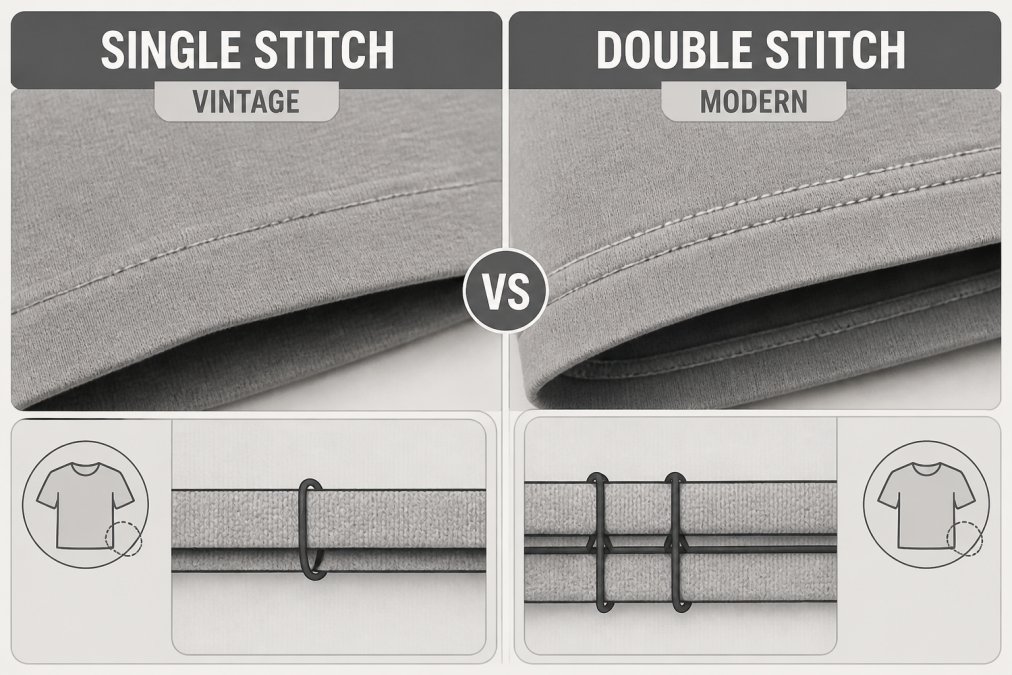
The stitching method is the first major authentication checkpoint. Most vintage t-shirts from the 1970s through early 1990s used single-stitch construction, while modern garments almost always use double-stitch. Understanding this difference eliminates a huge portion of fakes immediately.
Single-stitch construction means the needle passes through the fabric once, creating a thin, flexible seam visible on both interior and exterior. Double-stitch construction uses two parallel rows of stitching that create a thicker, more durable seam. This method became standard in the 1990s.
How to Identify Single-Stitch Garments
Flip the shirt inside out and examine the side seams. Run your finger along the seam from armpit to hem, on a genuine single-stitch vintage shirt, you'll feel one continuous line of thread. Hold the shirt up to light and look at the seam edge; you should see the thread creating a single line on both sides of the fabric.
Pay attention to the neckline. Vintage single-stitch shirts typically have a simple, single-ply neck tag sewn directly to the fabric with minimal reinforcement. On authentic vintage pieces, armhole stitching is often imperfect, with slight wobbles or inconsistent stitch density, evidence of era-specific manufacturing, not flaws.
Double-Stitch Production and Modern Reproductions
Double-stitch became the industry standard in the 1990s. If a shirt claims to be from the 1980s but has double-stitch construction, it's a reproduction. Single-stitch dominated from roughly 1970 to 1993.
Reproductions sometimes attempt to mimic single-stitch using thinner thread, but under close inspection, you'll still see two parallel lines of stitching. Modern double-stitch is uniform and precise. Vintage single-stitch shows natural variation from human operators and older machinery.
Vintage T-Shirt Tag Guide: Reading Labels for Authenticity
Tags tell stories if you know how to read them. Every era had specific label designs, fonts, printing methods, and tag construction techniques. Counterfeiters often overlook tag details because they focus on the front graphic. This makes tags one of your most reliable authentication tools.
Neck Tag Font and Printing Methods
In the 1970s and early 1980s, tags were typically single-ply cotton or poly-cotton blend with simple screen-printed text. The font was basic, often slightly imperfect, reflecting the printing technology of the era. By the late 1980s, tags became more sophisticated with better printing quality and more detailed care instructions.
Look at the font closely. Vintage tags from the 1970s-1980s used specific typefaces now recognized as era markers. Modern reproduction tags often use contemporary fonts that don't quite match the original.
The printing method matters. Vintage tags were screen-printed, creating a slightly raised, textured feel. Run your finger over the printed text. Genuine vintage tags have slight texture from screen-printing. Reproductions often use digital printing or heat-transfer methods that create a smoother, flatter surface.
Copyright Date Verification
Look for copyright dates on the tag or printed on the shirt itself. A shirt claiming to be from 1985 with a copyright date of 2015 is obviously fake.
However, copyright dates can be misleading. Some vintage shirts have no copyright date, while others have dates that seem off. A 1982 concert tee might have a 1980 copyright date if the design was created earlier. Cross-reference the copyright date with the design's actual release timeline. A 1985 copyright date on a design that didn't debut until 1989 is a red flag.
Analyzing Fabric Feel and Texture
Fabric composition and aging patterns reveal authenticity in ways that stitching and tags cannot. Vintage cotton jersey from the 1970s and 1980s feels distinctly different from modern cotton. The fiber structure, weight, and how the fabric has aged all tell the story of a shirt's true age.
Genuine vintage cotton has a particular hand, the way it feels in your fingers. It's typically softer and thinner than modern blanks, with a more delicate drape. Vintage single-stitch blanks typically weigh 4.5 to 5.5 ounces per square yard, while modern t-shirts typically run 5.5 to 6.5 ounces. This difference is subtle but noticeable when you hold a genuine vintage shirt.
Look for natural aging markers. Genuine vintage shirts show fade patterns that follow wear and wash cycles. The collar and cuffs are typically faded more than the body. Seams show distinct fade lines where the fabric was stressed. Armpits often have yellow or brown staining from decades of wear and storage. These are proof of age.
Reproductions sometimes artificially distress fabric to mimic aging, but artificial distressing follows a pattern, it's uniform and predictable. Real aging is chaotic. Genuine vintage cotton develops a slightly papery texture in areas of heavy wear as fibers break down over decades. This aged fiber structure is nearly impossible to replicate.
Screen Print Quality and Ink Texture Assessment
The graphic on the front reveals everything about a shirt's authenticity. Screen printing techniques, ink formulations, and aging patterns changed dramatically across decades.
Plastisol vs Water-Based Ink Differences
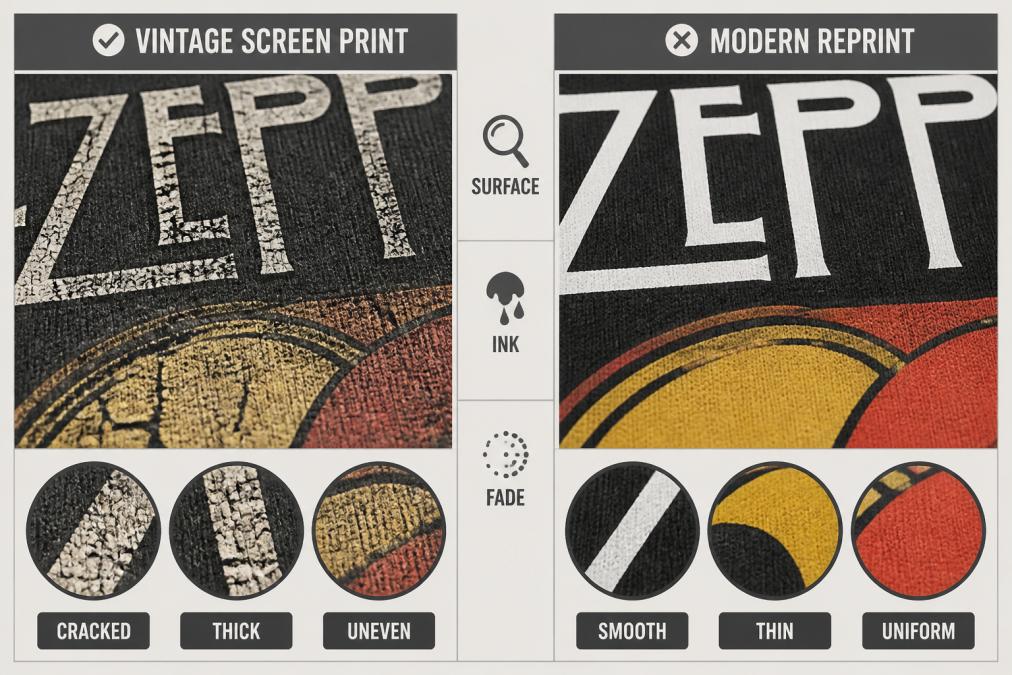
Screen printers in the 1970s and 1980s used plastisol ink almost exclusively. Plastisol is a thick, PVC-based ink that sits on top of the fabric, creating a raised, slightly rubbery feel. When you run your finger over a vintage screen print, you feel the ink texture distinctly.
Water-based ink became more common in the 1990s and 2000s as environmental concerns grew. Water-based ink soaks into the fabric, creating a flatter, more integrated finish. This difference is immediately apparent. On a genuine 1980s vintage shirt, the graphic should have noticeable texture. Reproductions using water-based ink will feel flat by comparison.
Ink Cracking and Natural Aging Patterns
Plastisol ink cracks in predictable ways as it ages. The cracks follow the shirt's fold lines and stress points, concentrating where the fabric moves most: across the chest, along the shoulders, in the armpits. This cracking is a signature of authentic vintage prints.
The pattern of cracking is organic, following the garment's actual wear patterns. Reproductions sometimes artificially crack ink to mimic this, but artificial cracking looks deliberate. Real cracking is chaotic.
Color fading in vintage prints follows a specific pattern. The ink doesn't fade uniformly. Areas exposed to light fade more. The edges of the design often show distinct color gradation. Reproductions using modern inks rarely achieve this exact fading pattern. Modern inks are formulated to resist fading. Vintage plastisol inks were not.
Advanced Authentication: Microscopic, Chemical, and UV Testing
Beyond visual inspection, there are forensic-level authentication methods that separate genuine vintage from even the best reproductions.
Fiber Analysis Under Magnification
A basic magnifying glass reveals details invisible to the naked eye. Examine the fabric fibers under 10x magnification. Genuine vintage cotton fibers show age, with slightly damaged surfaces. Modern cotton fibers, even when dyed to look vintage, have smooth, uniform surfaces.
Look at the weave pattern under magnification. Vintage single-stitch blanks have a particular weave density and structure that changed over time. A 1970s blank looks different from a 1980s blank. The thread itself tells a story, vintage thread has a different twist and composition than modern thread.
Chemical Smell and Residue Testing
Genuine vintage clothing stored for decades carries chemical signatures from its era. Old storage materials, laundry detergents, and environmental factors leave residual scents and chemical traces.
Smell a genuine vintage shirt. It should have a distinct, aged scent. This scent is nearly impossible to fake. Reproductions smell like new fabric and modern manufacturing, even after artificial aging.
Blacklight and UV Reactivity Checks
Different inks fluoresce differently under UV light. Vintage plastisol inks have specific UV reactivity signatures. When you shine a blacklight on a genuine 1980s screen print, it will glow in ways that modern inks don't. Modern reproductions using contemporary inks will show different UV reactivity. This is one of the hardest details to fake.
Vintage Shirt Authentication Checklist
Use this checklist when evaluating a vintage shirt. No single indicator proves authenticity, but multiple aligned indicators create a compelling case.
| Authentication Factor | What to Look For | Red Flag |
|---|---|---|
| Stitching | Single-stitch seams, visible on both sides of fabric | Double-stitch or perfectly uniform stitching |
| Neckline Tag | Simple single-ply construction, screen-printed text | Reinforced tag, digital printing, modern fonts |
| Copyright Date | Matches band/artist release timeline | Date doesn't align with design history |
| Fabric Weight | 4.5-5.5 ounces, thin and delicate | Heavy modern blank, stiff feel |
| Fabric Aging | Natural fade patterns, worn stress points | Uniform artificial distressing |
| Screen Print | Raised plastisol texture, ink cracking | Flat water-based print, sharp edges |
| Print Fade | Organic color gradation, soft edges | Uniform color, perfect edges |
| Seam Construction | Visible irregularities, era-appropriate method | Modern reinforced seams |
| Label Font | Era-specific typeface and spacing | Contemporary font design |
| Overall Feel | Lightweight, soft, aged fabric character | Stiff, new, modern construction |
Before purchasing any vintage shirt, work through this checklist. Genuine vintage shirts show consistent markers across construction, materials, and aging. Reproductions typically excel in one or two areas but fail in others.
Common Mistakes When Authenticating Vintage Tees
Most people make predictable errors when trying to spot fake vintage shirts.
The first mistake is trusting a single factor. A shirt with perfect single-stitch construction but an obviously modern tag is a reproduction with one authentic element. Never authenticate based on stitching alone. Cross-reference multiple factors.
The second mistake is assuming artificial distressing automatically means fake. Some vintage shirts were distressed when new, though this is rare and usually documented.
The third mistake is overestimating the importance of condition. A vintage shirt in perfect condition is actually rarer and more valuable than a heavily worn one. Condition doesn't determine authenticity; construction markers do.
The fourth mistake is not researching the specific design. Every band, every tour, every merchandise run is different. A shirt claiming to be from a 1982 concert tour needs verification against that specific tour.
The fifth mistake is ignoring the price. If a vintage band tee from a legendary tour is listed for $15, something is wrong. Genuine vintage concert merchandise commands premium prices.
The sixth mistake is not examining the shirt in person before buying. Photos hide details. The weight of the fabric, the texture of the ink, the feel of the stitching cannot be assessed from images. If you're spending significant money, insist on examining the piece in person or using a professional authentication service.
Spotting fake vintage shirts comes down to understanding how clothing was made in different eras and recognizing the markers that distinguish genuine pieces from reproductions. Construction methods, materials, aging patterns, and printing techniques all tell stories. Reproductions excel at copying visual appearance, but they struggle to replicate the deep details that define authentic vintage.
When you wear a genuine vintage piece, you're wearing history. Tim Cosgriff Art's vintage-inspired designs capture that authentic aesthetic through careful attention to era-appropriate construction and authentic visual details. But if you're hunting for genuine vintage pieces, use these authentication methods. Know what you're buying. Trust the construction details over the marketing claims. The real vintage pieces are out there, and knowing how to identify them transforms you from a casual shopper into a knowledgeable collector.
Frequently Asked Questions
How can you tell if a shirt is vintage from the early 2000s?
Check the neck tag for era-specific fonts and label designs that changed by year. Look for single-stitch construction, which was common through the early 2000s but phased out by the mid-2000s. Examine the screen print for plastisol ink with natural cracking and fade patterns rather than pristine, uniform color. Cotton jersey weight should feel substantial but soft from wash wear, not stiff like new fabric. Copyright dates on the graphic and care label information also confirm the era.
What are the most common signs of a modern reprint?
Modern reprints typically feature double-stitch construction throughout, perfect ink without cracking or natural aging, and uniform color saturation that looks too fresh. The neck tag may have modern fonts or printing methods that didn't exist in the original era. The fabric often feels stiff or has a chemical smell from new dyes and finishes. The hemline and neckline construction may show consistent, machine-perfect stitching without the slight variations found in vintage garment production.
How can I use a blacklight to check if a vintage shirt is authentic?
Examine the screen print under a blacklight or UV lamp. Authentic vintage plastisol inks often show minimal UV reactivity or specific color shifts depending on the pigments used. Modern water-based inks and synthetic dyes typically glow brightly under UV light. The neck tag printing also reacts differently, vintage tags show less fluorescence than modern reproductions. This test works best in a dark room and should be combined with other authentication methods for accuracy.
Do vintage shirts always have single-stitch hems?
Not always. While single-stitch construction was the standard for most vintage blanks through the 1990s and early 2000s, some manufacturers used double-stitch even in earlier decades. However, the prevalence of single-stitch is a strong indicator of authenticity for most vintage band tees and graphic shirts from that era. Double-stitch became the industry standard by the mid-2000s. Check multiple construction points, side seams, neckline, and hemline, rather than relying on a single stitch type alone.
This article was written using GrandRanker