
Table of Contents
- What Makes an Authentic Vintage Look
- Best T-Shirt Blanks for Vintage Style
- How to Distress T-Shirts: Physical Aging Techniques
- Vintage Wash Techniques for Clothing
- Styling Your Tee for a Timeless Rock Aesthetic
- Understanding Vintage Tags, Labels, and Print Methods
- Sustainability and the Case for Authentic Vintage
- Conclusion
Last Updated: August 14, 2026
What Makes an Authentic Vintage Look
The authentic vintage look sits at the intersection of intentional design and genuine wear. True vintage pieces carry unmistakable characteristics: softer fabric from years of washing, graphics with specific cracking and fading patterns that follow predictable wear paths, and construction details that reflect their era.
The difference between vintage-inspired and true vintage matters significantly. Vintage-inspired designs capture the aesthetic of a bygone era through color palette and graphic style. True vintage carries the physical evidence of time: loosened seams, cracked ink in specific patterns, and unevenly faded body color based on sun exposure.
Understanding era-specific construction is crucial. A 1970s vintage shirt should have single-stitch seams, narrower neckline ribbing, and era-appropriate tag placement. These aren't minor details; they're the difference between authenticity and reproduction.
Best T-Shirt Blanks for Vintage Style
Heavyweight cotton and single-stitch construction form the core requirement. Modern production defaults to lighter-weight fabric and double-stitched seams because they're faster and cheaper. Heavyweight cotton, typically 6 ounces or more, feels substantial and drapes differently than budget blanks.
A 6-ounce or 6.5-ounce blank develops authentic patina over time. When washed repeatedly, heavyweight fabric softens gradually, developing the lived-in texture that defines vintage aesthetics. Lighter fabrics become thin and papery instead.
Pure 100% cotton ages differently than blends. Pure cotton develops a softer hand-feel and allows dyes to fade evenly. Cotton-poly blends hold color more stubbornly and develop a stiffer texture. For authentic vintage, 100% cotton is standard.
Boxy fit is another critical factor. Vintage tees from the 1970s and 1980s were cut with a straight, relaxed body. The armholes sit lower, the body doesn't taper at the waist, and the overall silhouette is rectangular. This design choice changes how the shirt wears and ages.
How to Distress T-Shirts: Physical Aging Techniques
Creating controlled wear patterns requires understanding how fabric actually degrades. Real vintage pieces show wear in predictable locations based on how the shirt was worn and washed.
The shoulders take the most abuse from arm movement. To replicate this, use fine-grit sandpaper (220-grit or higher) to gently abrade the fabric in circular motions with light pressure. The goal is to thin the fibers, not create holes. The collar, neckline, and underarm seams also show authentic wear when lightly sanded.
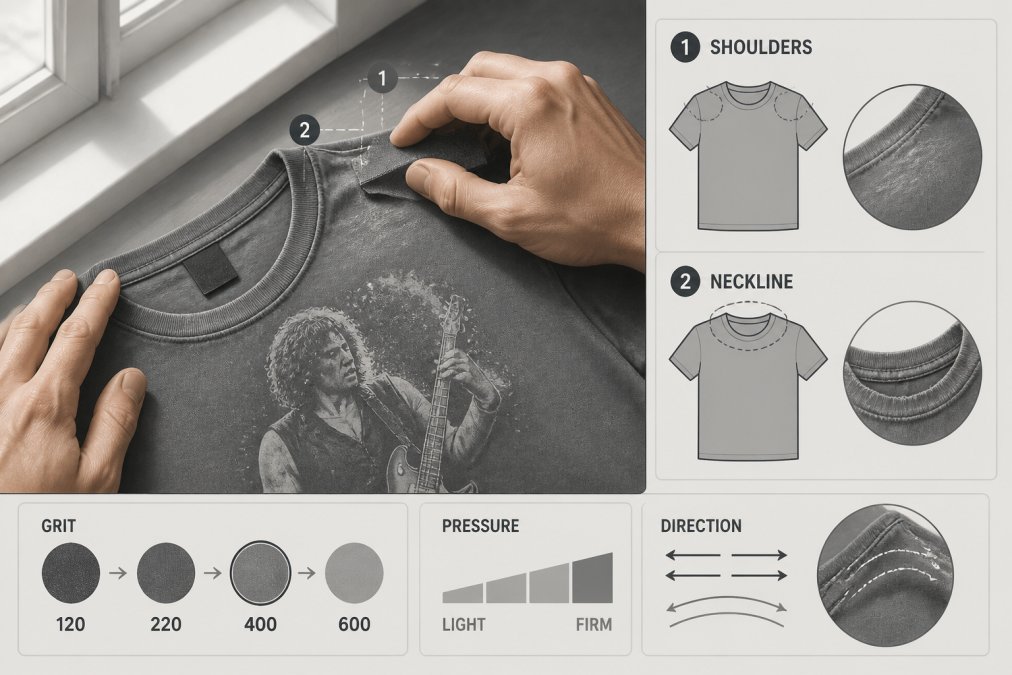
Vintage graphics crack rather than fade evenly. The ink sits on the surface, and as the shirt is washed and worn, the ink layer breaks into a distinctive crackle pattern. To create cracked ink effects, wash the printed shirt in hot water multiple times. While still damp, gently stretch the graphic area; the ink will crack as the fabric expands and contracts.
Controlled bleaching also works. Use a spray bottle with a 1-part bleach to 10-part water solution, applied lightly to graphic areas. This mimics years of sun exposure. This technique requires caution and should only be attempted on 100% cotton shirts.
The key to authentic-looking distressing is restraint. Real vintage pieces look worn, not destroyed. The graphic remains readable but clearly aged. The fabric is thinner in places but not holed.
Vintage Wash Techniques for Clothing
How you wash a shirt determines how it ages. Garment dyeing means dyeing the finished shirt rather than the fabric before cutting, creating uneven color distribution that's a hallmark of authentic vintage.
Acid washing, popular in the 1980s, strips color unevenly. To replicate this safely, use a diluted bleach solution (1 part bleach to 8 parts water) applied with a spray bottle. This works best on darker-colored shirts in well-ventilated spaces.
Chemical-free aging relies on repeated washing and drying cycles. Each wash degrades fibers slightly; each heat-dry cycle accelerates the process. A shirt washed 50 times in hot water looks noticeably older than one washed twice in cold water.
Hot water breaks down fibers faster than cold water. Moderate agitation and warm-to-hot water, repeated frequently, create authentic aging. Enzyme-based detergents accelerate softening but can make shirts look worn out rather than aged well. Standard detergent works better for controlled aging.
Styling Your Tee for a Timeless Rock Aesthetic
Pairing vintage-look graphics with modern basics creates the right balance. A classic rock band tee works best with understated, neutral pieces: dark jeans or black, simple sneakers or worn boots. Avoid adding too many vintage elements at once; one statement piece with modern basics reads as intentional.
Match the relaxed aesthetic of a boxy vintage tee with straight-leg or slightly tapered jeans. The overall silhouette should feel cohesive rather than mixing competing proportions.

Layering amplifies the vintage aesthetic without overdoing it. A denim jacket or flannel shirt worn open over the tee adds depth and extends the rock-and-roll vibe without looking forced.
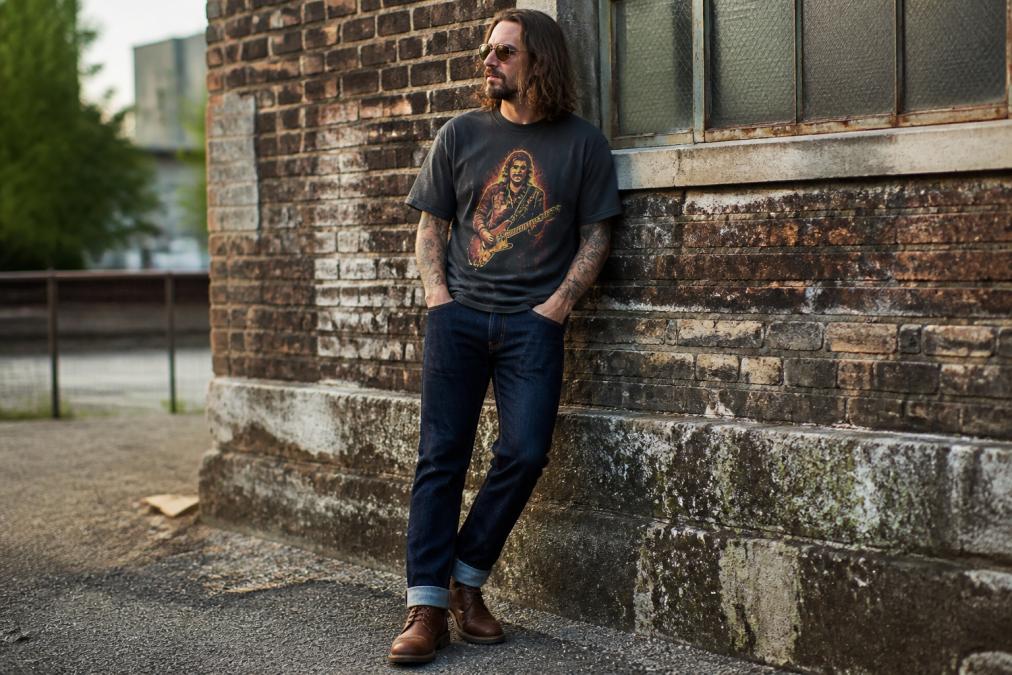
The boxy fit is historically accurate and flatters a wider range of body types than fitted cuts. The soft hand-feel comes from fabric quality and washing history. A shirt that feels substantial and soft reads as premium and well-made.
At Tim Cosgriff Art, the emphasis on heavyweight, garment-dyed blanks directly addresses this. Each piece is designed to feel like a lived-in favorite from the moment you wear it. The graphic quality and authentic vintage aesthetic create pieces for someone serious about the look.
Understanding Vintage Tags, Labels, and Print Methods
The tag tells a story. Vintage collectors examine tags first because they're nearly impossible to fake convincingly.
Screen printing, the method used for most vintage band tees, pushes ink through a mesh screen onto fabric. The ink sits on top rather than being embedded, creating the characteristic cracked appearance as the ink layer breaks under stress. Modern direct-to-garment printing and heat-transfer methods produce different visual results and cracking patterns.
Screen printing uses thicker ink that builds up on fabric. This thickness is why vintage graphics crack in distinctive patterns. Modern methods often use thinner ink applications that fade more gradually without characteristic cracking.
Era-specific tag and label history is crucial for authentication. Tags from the 1980s look different from 1990s tags. Font, material, label shape, and care instruction format all changed over time. A shirt claiming to be 1980s vintage but sporting a tag design from 1995 is obviously reproduction. Tag placement also matters; 1980s tags were typically centered on the back neck, while 1990s tags often moved to the side seam.
Print method specifics affect how graphics age. Screen-printed graphics fade and crack predictably. Heat-transferred graphics peel and bubble. Direct-to-garment prints fade evenly without cracking.
Sustainability and the Case for Authentic Vintage
The authentic vintage look connects to larger questions about consumption and sustainability. True vintage pieces keep existing garments in circulation rather than generating demand for new production.
Vintage pieces have already consumed their environmental resources decades ago. Wearing a 1980s band tee doesn't create new demand for cotton, dyes, or manufacturing energy. This makes vintage shopping a form of circular fashion, extending useful garment life.

Vintage pieces from the 1980s and 1990s were often made with more attention to detail than budget basics today. Heavyweight cotton, careful screen printing, and single-stitch construction weren't cost-cutting measures; they were standard practice. Genuine vintage pieces often outlast several modern shirts.
For those who can't source authentic vintage, the next-best option is choosing quality reproductions that mimic vintage construction. A modern heavyweight, single-stitch blank with authentic screen-printed graphics approximates the environmental and quality profile of vintage.
Tim Cosgriff Art emphasizes quality blanks and thoughtful design rather than fast-fashion production. Garment-dyed, heavyweight tees are built to last and age gracefully. They're designed to become pieces people actually want to keep wearing, developing authentic patina over years of wear.
The authentic vintage look ultimately reflects a choice about what matters in clothing. It's about pieces that feel substantial, look intentional, and carry meaning. Whether from actual vintage pieces or modern blanks built to vintage standards, the principle remains: clothing that respects both the wearer and the resources invested in making it.
Finding the authentic vintage look for modern tees requires understanding both the technical markers of genuine aging and the intentionality behind quality construction. Whether you're sourcing true vintage pieces, aging modern blanks through deliberate techniques, or choosing reproduction pieces built to vintage standards, the goal remains consistent: clothing that carries the weight of authenticity.
Tim Cosgriff Art's collection of graphic tees, including pieces like the Classic Tone Guitar T Shirt and the Guitar Vintage Tee, demonstrates how quality blanks and thoughtful graphic design create an authentic vintage aesthetic without requiring you to hunt vintage stores or experiment with distressing techniques. Each piece uses heavyweight, garment-dyed cotton that develops genuine patina over time. Get started with Tim Cosgriff Art and build a wardrobe of pieces designed to age authentically.

Frequently Asked Questions
How can I make a new t-shirt look naturally vintage?
Start with a heavyweight cotton blank using single-stitch construction. Apply controlled distressing through gentle washing, sun exposure, and targeted fabric degradation on seams and graphics. Use garment dyeing or acid wash techniques for faded color. The key is gradual aging rather than aggressive methods, authentic patina develops over time, not overnight. Combine physical wear patterns with proper fabric weight to achieve a convincing vintage aesthetic.
What are the best methods for distressing modern cotton tees?
Physical distressing works best on heavyweight cotton. Create wear patterns by hand-sanding seams, neckline ribbing, and graphic areas. For cracked ink effects, gently fold and crease printed areas repeatedly. Chemical-free methods include sun-fading through extended outdoor exposure and wash-down techniques using hot water and gentle agitation. Avoid aggressive methods that damage the fabric's integrity. Each technique should enhance the garment's character while preserving wearability.
What's the difference between vintage-inspired and authentically vintage-looking?
Vintage-inspired uses modern production methods and contemporary design elements that reference retro aesthetics. Authentic vintage-looking tees replicate the construction, fabric degradation, and wear patterns of genuine deadstock or thrifted pieces. The difference lies in single-stitch versus modern seam construction, fabric hand-feel, and how graphics age. Authentic pieces show era-specific tag history, screen printing techniques from their supposed era, and natural wear patterns that can't be faked overnight.
Why does fabric weight matter for achieving an authentic vintage look?
Heavyweight cotton, typically 6-7 ounces or more, develops authentic patina and soft hand-feel over time. Lighter modern fabrics feel stiff and thin, making them difficult to age convincingly. Heavyweight blanks also withstand distressing techniques better without tearing prematurely. The fabric's composition, pure cotton versus cotton blends, affects how it fades, wrinkles, and softens. Quality vintage pieces were almost always made from substantial cotton jersey, so starting with the right blank is essential for authentic results.
This article was written using GrandRanker