
Table of Contents
- Know Your Fabric Before You Wash Vintage Graphic Tees
- Best Laundry Detergent for Vintage Clothing
- Machine Wash vs. Hand Wash: Which Is Safer for Vintage Tees
- How to Remove Stains from Vintage Shirts Without Damaging the Print
- Drying Methods That Protect Graphic Print Preservation
- Restoring Yellowed Fabric and Repairing Graphic Cracking
- How to Store Vintage T-Shirts to Prevent Long-Term Damage
- Conclusion
Last Updated: August 9, 2026
Know Your Fabric Before You Wash Vintage Graphic Tees
A single wrong wash can destroy a shirt that survived three decades. The fabric composition determines everything: water temperature, wash method, drying approach, and how aggressively you can treat a stain. Pull the shirt inside out and find the care label. If it's faded, hold the fabric to the light. Tight, even weave usually signals 100% cotton; a shinier, more elastic feel points to a cotton-polyester blend.
100% Cotton vs. Cotton Blends: Why It Changes Everything
100% cotton dominated vintage tees from the 1970s through early 1990s. It's breathable and takes dye beautifully, but shrinks aggressively in heat and loses fiber integrity over decades. After 30-plus years, cotton fibers become brittle, and aggressive machine agitation can cause micro-tears that lead to deterioration.
Cotton blends, typically 50/50 cotton-polyester, became common in the late 1980s. The polyester component resists shrinkage and holds color better, but traps odors and reacts poorly to high-heat drying. Blends are more forgiving in the wash, but the graphic print often cracks faster under heat stress.
Treat any vintage tee as 100% cotton unless certain it's a blend. Erring toward gentler approaches never damages a blend, but treating brittle cotton like a durable modern shirt often ruins it.
Reading the Print: Screen Print, Heat Transfer, and Discharge
Screen prints are most common on vintage band tees. Ink sits on top of the fabric in layers. Cold water wash and air drying preserve them longest; heat breaks down the plastisol binders holding the ink.
Heat transfer prints feel slightly rubbery or plastic. More common on late 1990s tees onward, these are most vulnerable to peeling and cracking. Never use hot water, never iron directly over them, and avoid enzyme-based detergents.
Discharge prints are rarer. The dye is removed from the fabric rather than printed on top, leaving a soft impression. These are the most durable print types and can handle slightly warmer water, though cold is still safer.
Best Laundry Detergent for Vintage Clothing
Choosing the right detergent is about chemistry, not brand loyalty. Avoid enzymes, bleach, optical brighteners, and heavy fragrances. Enzymes break down protein-based fibers and attack screen print ink binders. Optical brighteners cause color shifts in vintage dyes over time.
| Detergent | Best For | Key Advantage | Watch Out For |
|---|---|---|---|
| Woolite Delicates | Regular gentle washing | Enzyme-free, hypoallergenic | May not tackle deep stains |
| Steamery Delicate | High-quality or delicate fabric | Enzyme-free, lanolin-enriched | Higher price point |
| Tide Free & Gentle | Sturdier vintage tees | Dye-free, perfume-free | Not specifically formulated for delicates |
| Retro Clean | Yellowed or heavily stained vintage | Removes age stains, soak-safe | Requires up to 48-hour soak |
Woolite Delicates is the most accessible option for regular washing. Steamery Delicate is worth the higher cost for shirts you genuinely care about. Tide Free & Gentle works well for tees needing a real clean, paired with a mesh laundry bag and cold water. Retro Clean is the specialist for soaking aged textiles and tackling yellow-brown staining.
Use less detergent than the bottle suggests. Most people over-dose, leaving residue that attracts dirt and stiffens the print.
Machine Wash vs. Hand Wash: Which Is Safer for Vintage Tees
Hand washing is safer than machine washing. Even gentle cycles create friction that degrades brittle vintage cotton and stresses print edges. Machine washing on a delicate cycle with a mesh laundry bag is acceptable for tees in good condition.
If the fabric shows thinning, the print has visible cracking, or the collar is fragile, hand wash only. If the shirt is structurally sound and the print is intact, careful machine washing is acceptable.
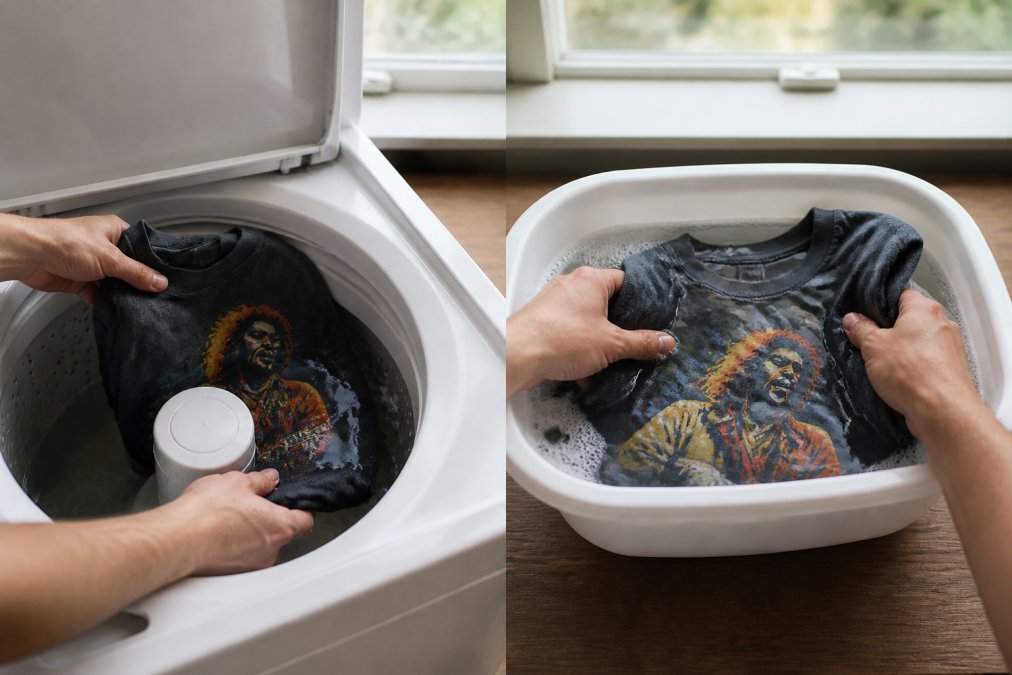
Step-by-Step: Machine Washing on a Gentle Cycle
- Turn the tee inside out. Direct friction against the print causes abrasion even in gentle cycles.
- Place the shirt inside a mesh laundry bag to reduce contact and limit mechanical stress.
- Set the machine to cold water wash, delicate or gentle cycle. Cold water prevents shrinkage and color bleeding.
- Add a small amount of enzyme-free, dye-free detergent, half the recommended dose is usually sufficient.
- Skip fabric softener. It coats fibers with waxy residue that traps odors and can interact poorly with vintage dyes.
- Remove the shirt promptly when the cycle ends to prevent mildew and color transfer.
Step-by-Step: Hand Washing with the Soak Method
- Fill a clean basin with cold water and add a small amount of mild detergent such as Woolite Delicates. Swirl gently to dissolve.
- Turn the tee inside out and submerge it fully. Press down gently without wringing or twisting.
- Let it soak for 15 to 30 minutes. For musty shirts, 10 minutes is enough.
- Gently agitate by pressing the shirt up and down in the water. Do not scrub, twist, or wring.
- Drain the soapy water and refill with clean cold water. Repeat the gentle press-and-lift motion to rinse until water runs clear.
- Lift the shirt out supporting its full weight. Do not hold it by one end, as water weight will stretch the fabric.
How to Remove Stains from Vintage Shirts Without Damaging the Print
The biggest mistake is reaching for a standard stain stick and scrubbing directly on the print. On a 30-year-old screen print, this lifts the ink along with the stain.
Apply a small amount of pH-neutral, enzyme-free detergent directly to the stained area using a soft cloth. Work from the outside of the stain inward to prevent spreading. Let it sit for five minutes, then rinse with cold water by pressing a damp cloth against the area, never rubbing.
For age stains, yellowing, or set-in discoloration, Retro Clean is most effective. The granular formula works through a long soak of up to 48 hours, lifting embedded staining without mechanical action that would damage fragile fibers.
Stain-specific notes:
- Sweat and body oil: Pre-soak in cold water with Woolite Delicates before washing.
- Food and drink: Blot immediately, never rub. Cold water rinse first, then spot clean.
- Mold or mildew: Requires a longer soak in specialist vintage detergent. Never use bleach.
- Ink or dye transfer: Act fast with cold water and gentle blotting. If set, use a specialist vintage cleaner.
Drying Methods That Protect Graphic Print Preservation
Heat is where most vintage tee damage happens. A shirt can survive a careful cold water wash and then be destroyed in 45 minutes in a hot dryer. Tumble drying shrinks cotton, cracks screen print ink, and causes color bleeding.
Air drying is correct for vintage graphic tees. Lay the shirt flat on a mesh drying rack rather than hanging it. Hanging puts all water weight on shoulder seams and collar, stretching both. A flat drying rack supports the full garment and allows air circulation from below.
Keep the shirt out of direct sunlight while drying. Sunlight fades vintage dyes faster than almost anything else. A shaded area with good air circulation is ideal.
If you must use a dryer, use the lowest heat setting, remove the shirt while still slightly damp, and lay it flat to finish drying. Never tumble dry a shirt with visible print cracking.
Restoring Yellowed Fabric and Repairing Graphic Cracking
Treating Yellowing and Brittle Fabric
Yellowing in vintage cotton is caused by fiber oxidation over time, compounded by old detergent residue, body oils, and storage conditions. Standard washing won't reverse it.
Retro Clean is most reliable for this problem. Fill a basin with warm water, dissolve the granular formula, and soak the shirt for 12 to 48 hours depending on severity. Check every few hours.
For brittle fabric that feels stiff or papery, fiber integrity has degraded. Washing won't restore it, but conditioning can slow further deterioration. A small amount of lanolin-enriched detergent like Steamery Delicate used in a soak can add suppleness to aging cotton fibers.
Fixing Cracked Graphics at Home
Cracked screen print graphics are common on vintage tees and often misunderstood. Cracking doesn't mean the shirt is beyond saving.
Place the shirt face down on a clean, flat surface. Cover the cracked print area with parchment paper. Using a household iron set to low heat with no steam, press gently over the parchment paper for 10 to 15 seconds. The heat softens remaining plastisol binders and can re-adhere minor cracks. Do not press directly on the print or use steam.
For significant cracking, fabric paint in a matching color applied with a fine brush can fill gaps and restore visual appearance. This is a cosmetic fix, but it extends the wearable life considerably.
Deodorizing Without Washing
Washing is not always right for a vintage tee that smells musty. Frequent washing accelerates fabric degradation. For a shirt that smells but isn't visibly dirty, deodorizing without washing is smarter.
Turn the shirt inside out and hang it in a well-ventilated area away from direct sunlight for 24 to 48 hours. Air circulation alone removes most light odors. For stronger smells, place the shirt in a sealed bag with baking soda for 24 hours. The baking soda absorbs odor molecules without touching the fabric.
How to Store Vintage T-Shirts to Prevent Long-Term Damage
How you store vintage t-shirts determines how much restoration work you'll need later. Poor storage is the primary cause of yellowing, brittleness, color bleeding, and print cracking.
Core storage principles:
- Fold, don't hang. Hanging stretches the collar and shoulder seams. Fold and stack horizontally.
- Use acid-free storage. Standard cardboard off-gases acids that yellow cotton. Use acid-free storage boxes or tissue paper between folded shirts.
- Control moisture. Damp environments cause mildew and accelerate fiber degradation. Keep shirts in a dry area with good air circulation. Avoid basements and attics.
- Keep out of sunlight. Even indirect sunlight fades vintage dyes over months. Store in a drawer, box, or closed wardrobe.
- Avoid plastic bags. Sealed plastic traps moisture and creates conditions for mildew. Use breathable cotton storage bags or acid-free boxes.

For long-term storage, wrap each shirt individually in acid-free tissue paper before placing it in the box. This prevents color transfer between shirts and provides an additional humidity barrier. A lint roller pass before storage removes surface debris that can attract insects or cause abrasion against the print.
The shirts in the Tim Cosgriff Art collection, like the Rock Band Photo T Shirt - Vintage Live Concert Tee, are made from heavyweight garment-dyed cotton with vintage-inspired aesthetics. These shirts respond exactly as described: cold water wash, air dry flat, fold for storage. The garment-dye process embeds color in the fiber rather than sitting on the surface, making them more forgiving than standard screen-printed tees, but the same care principles apply.

Washing vintage tees less often is genuinely better for them. Spot clean when possible, deodorize without washing when the shirt smells but isn't dirty, and reserve full washes for when truly needed.
| Care Action | Frequency | Method |
|---|---|---|
| Full wash | Only when visibly soiled | Cold water, gentle cycle or hand wash |
| Spot clean | After each wear if needed | pH-neutral detergent, soft cloth |
| Deodorize | Between washes as needed | Air out or baking soda method |
| Inspect print | Before each wash | Check for cracking, thinning |
| Storage refresh | Every 6-12 months | Refold, replace tissue paper |
Caring for vintage graphic tees takes more attention than tossing a modern shirt in the machine, but the payoff is a garment that lasts decades rather than seasons. Most vintage tees are ruined by a hot dryer or wrong detergent, not by age. If you're building a collection of rock music apparel worth preserving, the Tim Cosgriff Art lineup, including the Classic Tone Timeless Soul Guitar T-Shirt and the Punk Rock T Shirt - Retro Rock Band Photo Tee, uses heavyweight garment-dyed cotton built to hold up with proper care. Wash cold, air dry flat, fold for storage, and these shirts will outlast anything fast fashion produces. Continue shopping the Tim Cosgriff Art collection to find a piece worth caring for.

Frequently Asked Questions
How do you wash graphic tees without ruining the print?
Turn the tee inside out before washing, use cold water on a gentle or delicate cycle, and place it inside a mesh laundry bag to reduce agitation against other fabrics. Choose a mild, dye-free, enzyme-free detergent. Skip the dryer entirely and air dry the shirt flat away from direct sunlight. These steps together prevent color bleeding, graphic cracking, and fabric degradation that shortens a vintage tee's life.
Should you hand wash or machine wash vintage graphic tees?
Hand washing with the soak method is the gentler option and the best choice for tees with fragile or cracked graphics, very thin cotton, or unknown fabric history. Machine washing on a delicate cycle inside a mesh laundry bag is acceptable for sturdier garments in good condition. The key variable is the print's integrity: if the graphic is already showing wear, hand washing eliminates the agitation risk that a machine introduces even on a gentle cycle.
Can you put vintage graphic tees in the dryer?
Avoid the dryer whenever possible. High heat causes shrinkage, accelerates fiber degradation, and is one of the main causes of graphic cracking on screen-printed and heat-transfer designs. If you must use a dryer, select the lowest heat setting and remove the shirt while it is still slightly damp. Air drying flat on a mesh rack away from direct sunlight is the recommended approach for preserving both the fabric and the print long-term.
How do you freshen up an old, musty vintage t-shirt without washing it?
Hang the shirt in a well-ventilated area overnight to allow air circulation to dissipate mild odors. For stronger mustiness, lightly mist the inside of the garment with undiluted white vinegar and let it air dry completely before wearing. A fabric refresher spray formulated for delicates also works. Avoid over-washing vintage tees to reduce odors, since each wash cycle adds cumulative stress to the fabric and print.
This article was written using GrandRanker