
Table of Contents
- Why Authenticity Matters in Vintage Concert Shirts
- Single Stitch vs Double Stitch Shirts: The First Test
- Your Vintage Band Tee Tag Guide
- How to Date Vintage T-Shirts by Decade
- Spotting Modern Bootlegs and High-Quality Repros
- Your Authentication Checklist for Vintage Concert Shirts
- Frequently Asked Questions
Last Updated: September 8, 2026
Authentic vintage concert shirts are original band merchandise produced during or near the tour or album era they represent, distinguished by period-specific manufacturing methods rather than just age. The market for these tees has exploded, with collectors paying significant premiums for genuine pieces from the 1970s through the 1990s. We have compiled this guide to help you separate genuine artifacts from clever fakes. Before you spend money on that worn-in Grateful Dead tee, you need to know that most of what floods online marketplaces today are modern reproductions designed to mimic age.
Learning how to identify authentic vintage concert shirts comes down to understanding the manufacturing realities of past decades. Below, we will walk through the physical tests, tag analysis, and printing clues that authenticate a shirt with confidence. We will also cover how to spot modern bootlegs that fool even experienced buyers.
Why Authenticity Matters in Vintage Concert Shirts
Authentic vintage concert shirts are more than old cotton; they are historical documents of music culture, carrying the specific energy of a tour that happened decades ago. A genuine 1977 Led Zeppelin shirt tells a different story than a shirt printed last year to look like one, both in its physical properties and its place in collecting history.
The financial stakes are real. A shirt that looks convincingly vintage but is a modern reprint might be worth a fraction of what an original commands. According to the BBC's reporting on the vintage band tee market, original concert shirts from iconic tours have become a significant investment category, with rare pieces selling for thousands of dollars. Collectors and casual buyers alike need authentication skills to avoid paying original prices for repros.
Single Stitch vs Double Stitch Shirts: The First Test
The single stitch vs double stitch shirts distinction is the fastest physical test you can perform. Single-stitch construction means the hem and sleeve openings were sewn with one visible line of stitching, a method standard in American garment manufacturing before the mid-1990s. Double-stitch construction, featuring two parallel lines of stitching, became the industry norm after that period.
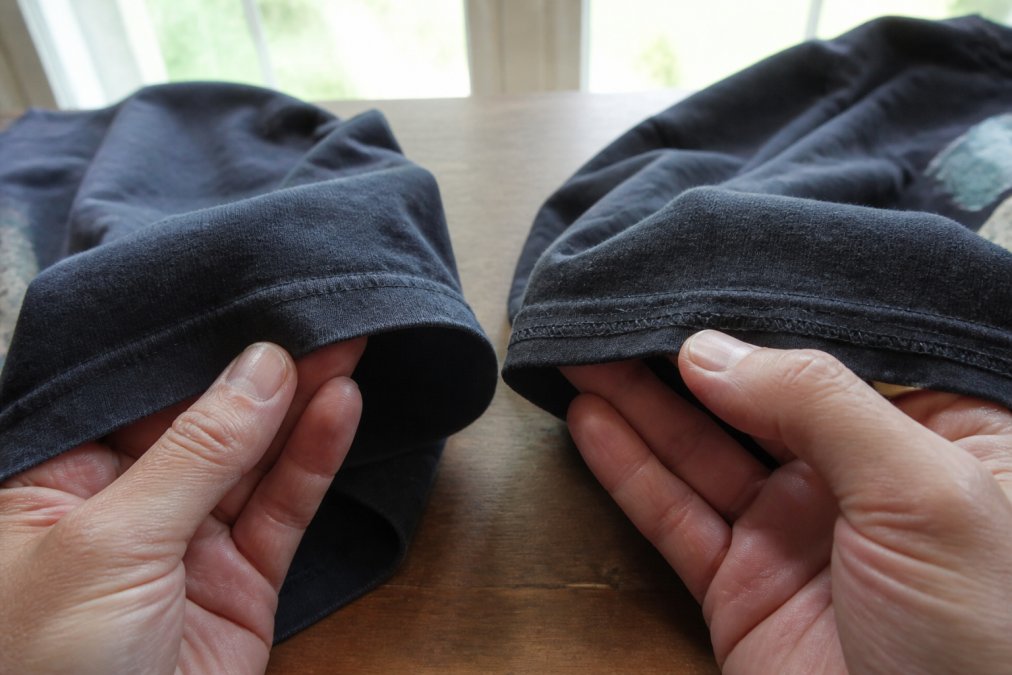
To check, turn the shirt inside out and examine the bottom hem and the sleeve cuffs. Look for one continuous line of stitching holding the fabric fold in place. If you see two parallel lines, the shirt was likely made after the mid-1990s, which means it cannot be an authentic vintage concert shirt from earlier decades. A common mistake is checking only the hem; always verify the sleeves as well, since some shirts feature mixed construction methods.
Your Vintage Band Tee Tag Guide
The vintage band tee tag guide is your most reliable resource for authentication, because tags provide specific manufacturer and date information that printing alone cannot. Clothing manufacturers changed their tags over time, and knowing these sequences helps you date a shirt within a few years. Brands like Hanes, Fruit of the Loom, and Screen Stars each have documented tag histories that collectors reference.
Tag Manufacturer Timelines
Each major blank manufacturer followed a predictable evolution in tag design, and memorizing these sequences is the fastest way to spot an anachronism. Hanes, for example, used a plain white tag with black serif lettering through the 1970s, then shifted to a red-and-black logo treatment in the early 1980s, and later introduced the "Beefy-T" heavyweight line with a distinct woven label. Fruit of the Loom tags from the 1970s feature a simple fruit emblem with the company name in a single line; by the mid-1980s, the tag included a registered trademark symbol and a more stylized logo. Screen Stars, a common choice for concert promoters, used a distinctive star logo that changed from a thin, single-color print to a bolder, multi-color design around 1984.
External Tag Database Resources
Relying on memory alone is risky, especially for less common blanks like Velva Sheen or Stedman. Professional authenticators maintain and consult external databases that catalog tag variations by year and manufacturer. The most reliable public resource is the Vintage Fashion Guild's label resource, which hosts an extensive, searchable archive of clothing labels with dated examples. The Defunkd vintage clothing forum also maintains a community-driven tag identification section where collectors post photos of dated tags for verification. Before you finalize a purchase, cross-reference the tag against these databases to confirm the style matches the claimed era. A tag that does not appear in any documented archive is a significant red flag, regardless of how convincing the rest of the shirt looks.
Reading the Copyright Line
Copyright lines are the single most decisive feature on any tag. A genuine vintage concert shirt will almost always display a copyright date, typically formatted as © 1977 or similar, indicating the year the artwork was licensed and printed. This date should align with the tour or album the shirt commemorates. Cross-reference this date against the manufacturer's tag style. If a shirt claims to be from 1972 but features a copyright line and a tag style that did not exist until 1985, the shirt is a reproduction. The United States Copyright Office maintains records on how copyright notices were formatted historically, which helps verify whether a date on a tag follows period-correct conventions.
Country of Manufacture Clues
The country of manufacture is another strong indicator. Most authentic vintage concert shirts from the 1970s and 1980s were made in the USA, since domestic production was still standard for American brands. Shirts labeled "Made in USA" with single-stitch construction and era-appropriate tags are strong candidates for authenticity. Shirts bearing "Made in Honduras," "Made in Mexico," or other overseas labels typically date from the 1990s or later, when American brands shifted production offshore. That said, some late-1980s shirts were already being produced overseas, so use this clue in combination with stitching and tag analysis rather than as a standalone test.
How to Date Vintage T-Shirts by Decade
Dating vintage t-shirts requires correlating several physical attributes, since manufacturing methods evolved steadily across the decades. Understanding how to date vintage t-shirts by decade gives you a framework for spotting anachronisms that betray modern fakes.
- 1970s: Heavyweight cotton, typically single-stitch throughout, tags with simple manufacturer names, screen prints often cracking with age.
- 1980s: Similar heavy cotton, but tag styles become more varied and detailed, with copyright lines becoming standard practice.
- 1990s: Cotton weight begins to drop, double-stitch construction appears on some garments, and overseas manufacturing becomes more common.
Screen Print Texture and Ink
The screen print texture and ink composition reveal a great deal about a shirt's age. Vintage shirts were printed using plastisol ink, which sits on the surface of the fabric rather than soaking in. Over decades, this ink develops a characteristic cracking pattern that follows the natural movement of the cotton.
Authentic vintage shirts display ink that has cracked along the stress points of the garment, particularly across the chest and shoulders. The cracks are fine and web-like, and the ink retains flexibility without flaking off entirely. Modern repros often try to fake this with distressing techniques, but the result usually looks uniform and mechanical rather than organic. A genuine shirt will also show fading in the fabric itself, not just the print, creating a soft, worn-in feel across the entire garment.
Spotting Modern Bootlegs and High-Quality Repros
Spotting modern bootlegs requires looking beyond surface age, because today's counterfeiters have become skilled at replicating single-stitch construction and aging fabric artificially. The most convincing fakes use actual vintage blank t-shirts purchased in bulk, then print modern designs onto them with new ink.
The giveaway is often the ink itself. New plastisol ink on an old shirt will not show the same organic cracking as a print that has aged with the garment for decades. Look for uniform fading that seems painted on, or ink that shows no cracking at all despite the shirt claiming decades of wear. Modern bootlegs also frequently feature artwork that is slightly too crisp, lacking the registration shifts and minor imperfections common in original 1980s screen printing.
Blacklight testing offers a reliable protocol for detecting modern inks. Shine a UV blacklight over the print; many modern inks contain optical brighteners that fluoresce under UV light, while vintage plastisol inks from the 1970s and 1980s typically do not. The Smithsonian's conservation resources document how UV light reveals material differences in textiles, a technique applicable to authentication. This test helps identify shirts where the print is newer than the garment.
Your Authentication Checklist for Vintage Concert Shirts
Use this checklist to authenticate vintage concert shirts before committing to a purchase. No single test is definitive; always evaluate multiple factors together.
| Authentication Test | What to Look For | Red Flag |
|---|---|---|
| Hem stitching | Single line of stitching on hem and sleeves | Double-stitch construction |
| Tag copyright date | Date matches the tour or album era | Missing date or mismatched era |
| Tag manufacturer style | Style matches documented history for the era | Anachronistic tag design |
| Country of manufacture | Made in USA for 1970s-1980s shirts | Overseas label on a claimed earlier shirt |
| Ink cracking pattern | Fine, organic cracks along stress points | Uniform, mechanical distressing |
| Blacklight test | No fluorescence under UV light | Bright fluorescence indicating modern ink |
Sizing discrepancies also reveal fakes. Vintage shirts from the 1970s and 1980s fit significantly smaller than modern shirts with the same label size. An authentic large from 1980 might measure 20 inches pit-to-pit, while a modern large measures 22 inches or more. If a claimed vintage shirt fits like a contemporary shirt of the same labeled size, treat it with suspicion.
Authenticating vintage concert shirts takes practice, but the reward is owning a genuine piece of music history rather than a clever imitation. When you want the vintage aesthetic without the authentication risk, Tim Cosgriff Art offers vintage-inspired graphic tees featuring iconic rock musicians. Our designs capture the timeless look of classic rock apparel while delivering the comfort and durability of new high-quality garments.
Identifying authentic vintage concert shirts ultimately comes down to understanding the manufacturing details of past decades and checking them systematically. The thrill of finding a genuine 1970s tour shirt in a thrift store is real, but so is the risk of overpaying for a modern repro. If you prefer the look without the guesswork, explore the curated collection at Tim Cosgriff Art, where vintage-inspired designs meet premium construction. Continue shopping and wear your music history with confidence.
Frequently Asked Questions
How can you tell if a concert t-shirt is real vintage?
Check the stitching first. A genuine vintage shirt from the 1980s or early 1990s will have a single stitch on the hem and sleeves. Look at the neck tag for a copyright date and licensing text. The fabric should feel heavier with a softer, worn texture. Screen prints on original vintage concert shirts will show some cracking and fading, which is a natural sign of age.
What is the difference between a vintage shirt and a bootleg?
A vintage shirt is an original piece from the concert's era, often with a tag showing a copyright date and licensing information. A bootleg is an unauthorized copy made to look old. Modern bootlegs often use double stitching, artificial distressing, and fake tags. They may also have a newer, heavier fabric weight compared to original vintage shirts.
Are vintage concert shirts worth money?
Yes, original vintage concert shirts can be quite valuable, with some rare designs fetching hundreds or even thousands of dollars. Value depends on the band, the tour, the design's rarity, and the shirt's condition. Authentic shirts with clear provenance and no major flaws like dry rot are the most collectible and command the highest prices.
What does tag ghosting mean on a vintage t-shirt?
Tag ghosting is a faint, discolored outline on the inside of the shirt where the neck tag used to be. It happens when the tag is removed and the surrounding fabric has faded from washing, but the area under the tag has not. It is a strong indicator of age and authenticity, as it takes many years of wear and washing to develop.