
Table of Contents
- What You're Actually Paying For
- How to Spot High Quality Graphic Tees
- Fabric Quality and Material Composition
- Durability: What Wash-Tests Reveal
- Cost-Per-Wear Analysis
- Best Quality Band T-Shirt Brands and Alternatives
- Sizing Consistency and Fit
- Frequently Asked Questions
Last Updated: September 3, 2026
What You're Actually Paying For
When you're comparing graphic tees online, price differences can feel arbitrary. A vintage-inspired band shirt from one retailer costs significantly more than what you'd pay elsewhere. The question isn't just whether the price is high, it's whether you're getting something genuinely different for your money.
The answer depends on what actually goes into the shirt. Premium graphic tees aren't just printed cotton; they're built from specific choices about fabric weight, construction methods, print durability, and design authenticity. Understanding these differences separates justified pricing from simple markup.
Tim Cosgriff Art approaches this differently than mass-produced alternatives. Each piece is designed with attention to vintage authenticity and garment construction that goes beyond surface-level nostalgia. The brand focuses on delivering what classic rock fans actually want: pieces that feel like genuine tributes to iconic musicians, not cheap reproductions.
Here's what separates a $20 shirt from one that costs more: the fabric itself, the printing process, how the garment is cut and assembled, and whether the vintage aesthetic is researched or guessed. When you pay more, you're investing in choices made at every stage of production.
How to Spot High Quality Graphic Tees
Quality in a graphic tee shows up in specific, observable details. You can evaluate a shirt before buying by looking at construction, print quality, and fabric characteristics that indicate whether it will last or fade after a few washes.
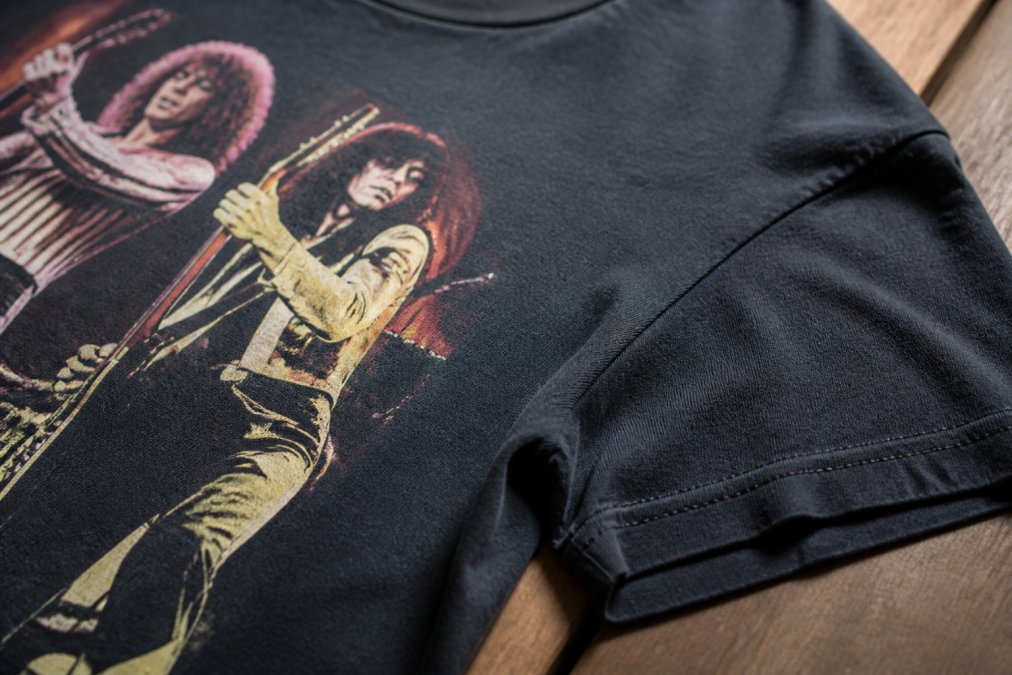
Start with the stitching. Run your fingers along the seams and neckline. Premium tees use reinforced stitching with tight, even stitches that won't unravel. Cheap alternatives skip this step, using minimal thread and loose tension. Look at the sleeve seams especially, they take the most stress during wear and washing.
Next, examine the print itself. High-quality screen printing creates crisp, clean lines with sharp color registration. The ink sits on top of the fabric with a consistent hand-feel, not stiff and plasticky, but not so thin it feels like paint. When you run your finger across the graphic, you should feel a slight texture. Faded or blurry graphics indicate either poor printing or low-quality ink that won't hold up to washing.
The fabric weight matters more than most people realize. Hold the shirt and feel how substantial it is. Quality band tees use heavier cotton, typically 6-7 ounces per square yard, which feels durable and has better drape (peer-reviewed research). Lightweight shirts at 4-5 ounces will feel thin and flimsy, they shrink more easily and wear out faster.
Check the neckline construction. A reinforced neck binding with a flat, finished edge indicates care in production. Cheap shirts often have unfinished or poorly sewn necklines that curl and fray. The same applies to armholes and the bottom hem.
Fabric Quality and Material Composition
The fabric you're wearing against your skin for years determines whether a shirt feels premium or budget. Graphic tees marketed as vintage-inspired should use quality cotton that softens with wear rather than deteriorates.
Premium band tees typically use 100% cotton or a high-cotton blend. The cotton grade matters, ringspun cotton, which is combed and twisted during production, creates softer, stronger fabric than regular cotton. This process removes short fibers and aligns the remaining fibers, resulting in a garment that feels better and lasts longer.
Fabric weight, measured in ounces per square yard, is a concrete specification you can compare. A 6-ounce shirt will feel noticeably thinner than a 7-ounce version. Most quality band tees land between 6.1 and 7.0 ounces. Anything below 5.5 ounces is lightweight and less durable. Above 7 ounces approaches heavy-weight territory, which some prefer for a sturdier feel but others find too substantial.
The fiber length also affects longevity. Longer cotton fibers create stronger yarn and reduce pilling, those annoying little balls that form on fabric after repeated wear. This is why Pima and Supima cotton, which have longer fibers, command higher prices and deliver better durability.
When comparing options, ask about the cotton source. This transparency signals that the brand cares about supply chain integrity, which typically correlates with attention to other quality details.
Durability: What Wash-Tests Reveal
A shirt's true quality emerges after multiple wash cycles. The graphic should remain sharp, colors shouldn't fade dramatically, and the fabric shouldn't shrink excessively or lose its softness.
Proper wash-testing involves running a garment through repeated cycles under controlled conditions, typically 10-20 washes using standard detergent and water temperature (astm.org). After each cycle, the tester evaluates color retention, graphic fidelity, fabric softness, and dimensional stability (shrinkage).
Quality screen-printed graphics hold up because the ink bonds properly to the fabric. After 15 washes, a premium print should show minimal cracking or fading. Budget prints often show visible degradation by wash five or six, with color loss and ink cracking around edges.
Fabric shrinkage is another critical factor. Most cotton shirts shrink slightly in the first wash, then stabilize. Quality tees shrink less than 3% in length and width (the FTC). Cheaper alternatives sometimes shrink 5-8%, which noticeably changes fit. This is why pre-shrinking during manufacturing matters, it's an extra step that costs money but prevents customer disappointment.
The softness test matters too. Run your hand over the fabric before and after washing. Premium cotton actually softens with washing as the fibers relax. Poor-quality fabric becomes stiff and rough as the finish breaks down.
When you're evaluating whether a higher price is justified, consider wash durability as a primary factor. A shirt that maintains its appearance and feel after 20-30 washes justifies a premium price over one that degrades noticeably after five.
Cost-Per-Wear Analysis
Price alone doesn't determine value. A $45 shirt worn 100 times costs 45 cents per wear. A $25 shirt worn 20 times costs $1.25 per wear. This perspective shifts how you evaluate the "is wornfree worth the higher price" question.
Cost-per-wear depends on how long a garment lasts and how often you actually wear it. A premium vintage-inspired band tee that you wear consistently for two years, accounting for regular washing, delivers better value than a cheaper alternative that fades and shrinks after six months of occasional wear.
Calculate this yourself. If you buy a shirt for $50 and wear it twice per week for two years, that's roughly 104 wears per year, or 208 total wears. The cost-per-wear is approximately 24 cents. If the same shirt from a budget brand costs $20 but you retire it after a year because the graphic has cracked and the fabric feels rough, you might get only 52 wears. The cost-per-wear jumps to 38 cents.
The equation changes based on your habits. If you wear band tees infrequently, maybe for concerts or specific occasions, a cheaper option might make sense because you won't accumulate enough wears to justify premium pricing. But if graphic tees are your regular casual wear, investing in quality dramatically improves the value proposition.
This analysis also accounts for replacement frequency. Buying one quality shirt per year costs less than buying two budget shirts that don't last. The time and effort involved in finding, purchasing, and processing returns for failed garments adds hidden costs that pure price comparisons ignore.
Best Quality Band T-Shirt Brands and Alternatives
The market offers several approaches to band tee production, each with different price points and quality standards. Understanding your options helps clarify whether paying more actually delivers better results.
Tim Cosgriff Art focuses on authentic vintage-inspired designs featuring iconic rock musicians. The brand prioritizes garment construction and fabric quality, delivering pieces that feel like genuine tributes rather than mass-produced merchandise. The design philosophy emphasizes timeless aesthetics that work across age groups, a 58-year-old fan and a 35-year-old enthusiast should both find pieces that feel authentic to their personal style, not trendy or forced.
The brand's approach to vintage authenticity matters. Rather than chasing trends, Tim Cosgriff Art researches design elements that capture the actual era and aesthetic of classic rock. This attention translates to graphics that feel historically grounded, not like contemporary designers guessing at what vintage should look like.
Other retailers in the space take different approaches. Some focus on licensed band merchandise, working directly with estates or rights holders. Others prioritize affordability over durability, using thinner fabric and simpler printing. Some specialize in reproductions of rare vintage pieces, which appeals to collectors but may not suit everyday wear.
The quality spectrum is wide. Budget retailers use lightweight fabric and basic printing that fades quickly. Mid-range options offer decent construction with moderate durability. Premium brands invest in fabric quality, print durability, and authentic design research.
Bluescentric as an Alternative for Classic Rock Fans
Bluescentric serves a similar audience but with a different product focus. The brand emphasizes blues and classic rock aesthetics, targeting fans who want apparel that reflects their musical taste.
Bluescentric offers vintage-style designs with attention to fabric quality and print durability. For classic rock fans specifically, the brand provides an alternative to mainstream band merchandise retailers. The design philosophy leans toward authentic blues and rock aesthetics, which appeals to fans who want pieces that feel historically rooted.
When comparing Bluescentric to other options, consider whether the specific artists and design angles match your preferences. Some fans prefer broader classic rock representation, while others focus specifically on blues musicians. Bluescentric's specialization works well if your taste aligns with their focus.
The pricing comparison between Bluescentric and other quality options depends on current offerings. Both brands position themselves above budget retailers but below luxury price points. The choice between them often comes down to specific designs available and personal preference for which artists and aesthetic directions resonate most.
Sizing Consistency and Fit
Inconsistent sizing destroys the value of any shirt, regardless of quality. You can't wear a shirt that doesn't fit, and returns create friction that makes the buying experience frustrating.
Quality brands maintain strict sizing standards across production runs. This means a medium from one batch fits the same as a medium from the next batch. Budget manufacturers often vary sizing significantly between runs, which explains why some customers report needing different sizes from the same retailer.
Vintage-inspired aesthetics create specific fit expectations. These shirts typically use a more relaxed, classic cut rather than modern slim-fit proportions. This works well for older customers who prefer comfort and traditional silhouettes, but requires clear communication about how the fit compares to contemporary brands.
Check sizing charts carefully, and look for customer feedback about fit. Does the shirt run large, small, or true to size? Does it shrink significantly in the first wash? These details matter more than the number on the tag. A shirt labeled "large" means nothing if it fits like a small after washing.
Consistency in sizing also reflects manufacturing discipline. Brands that maintain tight sizing standards typically also maintain quality standards in other areas, fabric sourcing, print durability, construction methods. Inconsistent sizing often signals broader quality control issues.
When evaluating whether a higher price is worth it, consistent sizing that requires minimal returns represents real value. The time and cost of dealing with returns far exceeds any savings from buying cheaper alternatives that don't fit properly.
The question of whether to pay more for band tees ultimately comes down to what you value. If you wear graphic tees regularly and want pieces that maintain their appearance and feel after years of wear, investing in quality makes sense. If you wear them occasionally or prioritize low cost above all else, budget options exist.
Tim Cosgriff Art delivers vintage-inspired band tees that balance authentic design with quality construction. The brand's focus on fabric weight, print durability, and garment construction means pieces that look sharp and feel comfortable for years. For classic rock fans who wear band tees as genuine expressions of their musical passion, not as trendy statements, that consistency justifies the investment. Continue shopping and find pieces that speak to your love of legendary musicians.
Frequently Asked Questions
Is $40 a lot for a graphic t-shirt?
It depends on what you're getting. Mass-market band tees run $15-25, while premium vintage-reproduction shirts typically cost $35-50. The difference lies in fabric weight, print durability, and garment construction. A shirt made from quality materials with screen printing designed to last justifies the price through cost-per-wear. Cheaper alternatives often fade or shrink after fewer washes, making the true cost-per-wear higher.
Are premium vintage-style tees more durable than mass-market options?
Yes, significantly. Premium graphic tees use heavier cotton (typically 5.5-6.1 oz versus 4.2-4.5 oz in budget options), which resists pilling and maintains shape through repeated washing. Screen printing on quality merchandise uses thicker ink layers that don't crack after a few washes. The stitching integrity, single-stitched versus double-stitched seams, also matters; premium brands reinforce neck and armholes. Wash-test comparisons consistently show premium tees maintain graphic fidelity and fit after 30+ cycles, while mass-produced shirts show visible fading and shrinkage by wash 15.
What factors determine the quality of a band t-shirt?
Four factors matter most: fabric weight (measured in GSM or ounces), fiber quality (100% cotton versus cotton blends), construction method (single versus double-stitched seams), and print technique (screen-printed versus direct-to-garment). Premium band tees use 5.5+ oz ringspun cotton, reinforced stitching at stress points, and multi-layer screen printing that flexes with the fabric rather than cracking. The garment construction, collar tape, side seams, and hem quality, affects longevity. Authentic vintage reproduction designs also matter; they should reference original concert artwork or era-specific design elements rather than generic graphics.
How does Tim Cosgriff Art compare to other premium band t-shirt brands?
Tim Cosgriff Art focuses on vintage-inspired music apparel with authentic graphic designs featuring iconic rock musicians. The brand emphasizes garment construction quality and premium cotton alongside design authenticity, positioning itself against both mass-produced merchandise and generic retailers. When evaluating premium band tee brands, look for transparency about fabric weight, stitching details, and print durability. Comparing cost-per-wear and long-term graphic fidelity across brands, not just initial price, reveals which offers genuine value for classic rock fans seeking wardrobe staples.
This article was written using GrandRanker