
Table of Contents
- What Makes a Band Tee Premium
- Ring-Spun vs Carded Cotton: Understanding the Difference
- Inspecting Fabric Weight and Hand-Feel
- Signs of High-Quality Screen Printing
- Verifying Tag Authenticity and Construction
- Is a Graphic Tee Worth It for a Date Night
- Care and Maintenance for Longevity
- Spotting Bootleg and Reproduction Tees
Last Updated: August 25, 2026
What Makes a Band Tee Premium
Premium cotton band tees aren't just any graphic shirt with a rock musician's face on it. The difference between a quality piece and a knockoff comes down to materials, construction, and printing technique. At Tim Cosgriff Art, we focus on these fundamentals because they determine whether a tee feels great, lasts years, or falls apart after a few washes.
A truly premium cotton band tee combines several specific qualities: the cotton itself must be high-quality, the stitching must be tight and consistent, the graphic print must be durable, and the overall construction should reflect care in every detail. When all these elements align, you're holding something worth wearing repeatedly, not just a disposable piece of merch.
The price difference between premium and cheap band tees often frustrates buyers. You might see one shirt for $15 and another for $45 and wonder what justifies the gap. The answer lives in fiber quality, thread construction, and how the garment is assembled. A premium cotton band tee uses better raw materials and more skilled production methods, which costs more upfront but pays dividends in durability and comfort.
Ring-Spun vs Carded Cotton: Understanding the Difference
Ring-spun cotton and carded cotton represent two fundamentally different approaches to fiber preparation. Understanding this distinction is essential for identifying premium cotton band tees, because the choice between these two directly affects how the fabric feels and performs.
Ring-spun cotton is produced by twisting individual fibers together in a spiral pattern, which creates a stronger, more cohesive yarn. This process takes longer and costs more, but the result is a smoother, softer fabric with superior durability. Ring-spun yarn has tighter fiber density, meaning the fibers are more densely packed, which makes the cotton more resistant to pilling and wear.
Carded cotton uses a simpler process where fibers are combed parallel to each other but not twisted together as tightly. This method is faster and cheaper, but the resulting yarn is less strong and the fabric tends to feel slightly rougher. Carded cotton fabrics are more prone to pilling and tend to break down faster under repeated washing.
When you're evaluating premium cotton band tees, ring-spun cotton is the superior choice. It holds color better, resists fading, and maintains its shape after washing. The hand-feel is noticeably softer against skin, and the garment will last significantly longer with proper care. If a tee is made from ring-spun cotton, that's a strong indicator you're looking at a quality piece.
The price premium for ring-spun cotton is real. A band tee made from ring-spun cotton will cost more than one made from carded cotton, but the investment pays off over time. A single premium tee worn and washed regularly will outlast multiple cheaper alternatives.
Inspecting Fabric Weight and Hand-Feel
Fabric weight tells you how dense the cotton actually is. This measurement, expressed in grams per square meter (GSM), directly affects durability, comfort, and how the tee will age. Premium cotton band tees typically use heavier-weight fabrics than budget alternatives.
Understanding GSM and Fiber Density
GSM stands for grams per square meter, a standard textile measurement that quantifies fabric density. A lightweight band tee might be 150-160 GSM, while a premium piece typically ranges from 180-220 GSM (peer-reviewed research). This difference sounds small numerically, but it translates to noticeably thicker, more substantial fabric in your hands.
Higher GSM means more cotton fibers packed into the same space, which creates several benefits. The fabric is more opaque, so graphics don't show through to the back. The tee holds its shape better after washing instead of stretching out. The garment feels more substantial and luxurious when you wear it. Over time, a heavier-weight fabric resists thinning and degradation far better than lightweight alternatives.
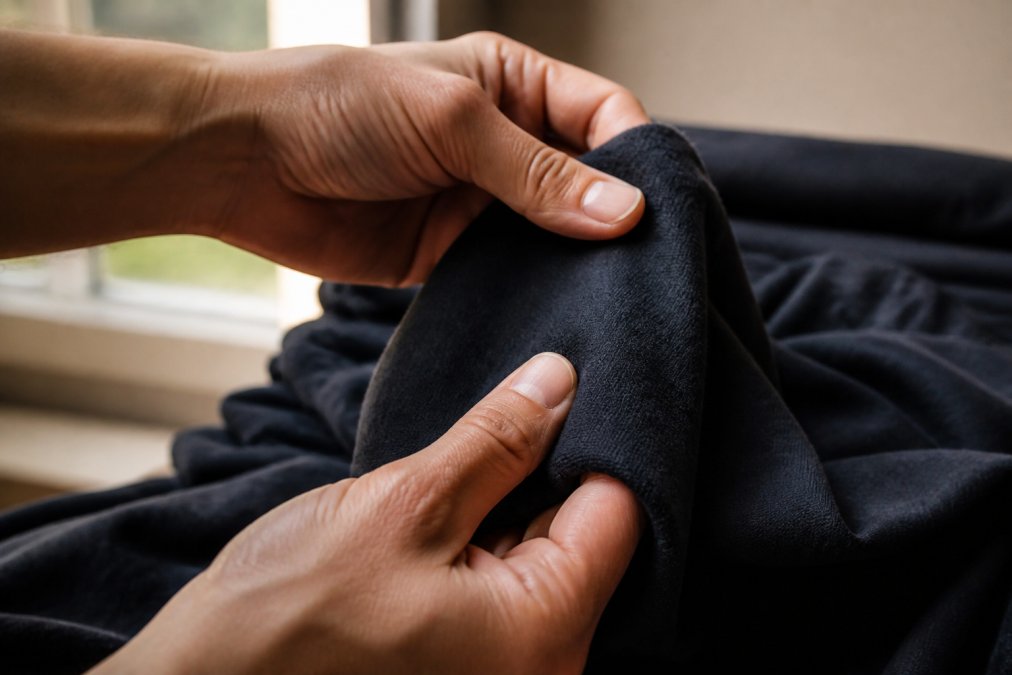
When you're inspecting premium cotton band tees in person, pick one up and feel the weight in your hands. A quality tee should feel substantial, not flimsy. Flex the fabric between your fingers, premium cotton has a slight resistance and springiness, while cheap cotton feels limp. Run your hand across the surface; premium fabric should feel smooth and consistent, without rough spots or thin areas.
The hand-feel test is one of the most reliable ways to spot quality. Cheap cotton often feels papery or stiff initially, then becomes soft but thin after a few washes. Premium ring-spun cotton feels soft immediately and maintains that softness while staying durable. This comes down to fiber quality and how tightly the yarn is twisted together.
Signs of High-Quality Screen Printing
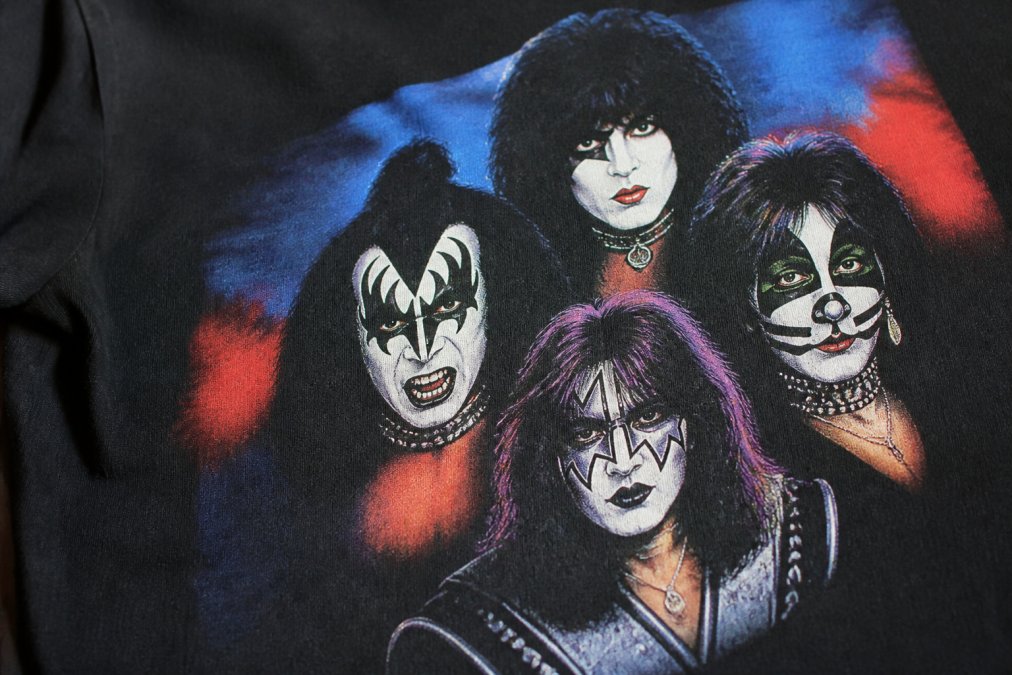
The graphic print is what makes a band tee visually distinctive, but quality printing determines whether that graphic survives years of wear. Premium cotton band tees feature screen printing that's crisp, vibrant, and built to last. Learning to spot quality printing separates authentic merchandise from cheap reproductions.
Checking for Cracking and Fading
Cracking is the most visible sign of poor-quality printing. When ink cracks across the surface of a graphic, it means the print wasn't properly cured or the ink wasn't designed to flex with the fabric. Premium screen printing uses inks formulated to move with the cotton, so the graphic stays intact even after hundreds of washes (peer-reviewed research).
To check for cracking, examine the edges of the graphic closely. High-quality prints have clean, sharp edges with no fraying or separation. The ink should sit smoothly on the fabric surface without visible cracks or peeling. If you see a web of tiny cracks across the graphic, that's a sign the print was applied with inadequate heat or low-quality ink.
Fading happens over time, but the rate of fading reveals print quality. Premium band tees use wash-fast inks that resist color loss even after repeated laundering. A quality graphic might fade slightly after 50 washes, while a cheap print becomes noticeably dull after 10-15 washes (peer-reviewed research). When evaluating a new tee, look at the color saturation and vibrancy of the graphic. Rich, deep colors are more likely to come from premium inks.
The print should also feel smooth to the touch. Run your finger across the graphic, premium prints have minimal texture, while cheap prints often feel thick, plasticky, or rough. This tactile difference matters because it indicates how the ink was applied and what materials were used.
Verifying Tag Authenticity and Construction
The tag on a band tee tells you a lot about its origin and quality level. Authentic merchandise from reputable sources uses professional tags with clear branding, proper care instructions, and consistent formatting. Bootleg tees often have poorly printed or misspelled tags, inconsistent fonts, or tags that feel cheap and thin.
Examine the tag carefully. Is the text crisp and properly aligned, or does it look like it was printed hastily? Are the care instructions clear and accurate? Does the tag feel substantial, or does it feel thin and flimsy? A quality tag is usually made from woven material (not printed directly on the fabric) and includes proper sizing, material composition, and care guidance.
The tag should also list the material composition accurately. Premium cotton band tees explicitly state "100% cotton" or "ring-spun cotton," not vague descriptions like "cotton blend" or "fabric." If the tag lists fiber composition as a blend (CVC cotton, tri-blend, or similar), that's a legitimate product type, but it's not the same as pure premium cotton.
Copyright and date information on the tag or printed onto the garment itself helps verify authenticity. Official band merchandise includes copyright notices, licensing information, and sometimes the year of release. Bootleg tees often omit this information or include it incorrectly. If you're buying a tee featuring a specific band or album, verify that the copyright date and licensing details match the actual release date of that album or tour.
Single-Stitch vs Double-Stitch Quality
The stitching on a band tee reveals a lot about construction quality. Single-stitch construction uses one continuous thread line to seam the garment together, while double-stitch uses two parallel lines of thread. Both approaches can produce quality results, but they indicate different production philosophies.
Single-stitch construction is more common on vintage and premium modern pieces. It requires more skilled manufacturing because the single thread line must be perfectly straight and consistent. Single-stitch tees feel lighter and more flexible because there's less thread bulk, and the seams are less visible. This construction is often associated with vintage band merchandise and high-end reproductions.
Double-stitch construction uses two parallel lines of thread, which creates a stronger, more durable seam. This approach is more forgiving during manufacturing and tends to be faster to produce. Double-stitch tees are slightly stiffer at the seams and the stitching is more visible, but they're extremely durable.
For premium cotton band tees, examine the seams closely. The stitching should be straight, even, and consistent throughout. Loose threads, uneven spacing, or crooked seams indicate poor quality control. The thread color should match the fabric (usually white or black), and there should be no visible knots or repairs.
The neck seam is particularly important to inspect. On a quality tee, the neckline is reinforced with a binding tape or ribbing that prevents stretching and tearing. This binding should be smooth, evenly applied, and securely stitched. If the neckline binding is loose, wrinkled, or poorly attached, that's a sign of rushed manufacturing.
Is a Graphic Tee Worth It for a Date Night
Whether a premium cotton band tee is appropriate for a date night depends on the context, your personal style, and how you approach the overall look. The short answer: yes, if styled intentionally and paired with the right pieces.
A band tee can absolutely work for a date night, especially if you're going somewhere casual like a concert, live music venue, brewery, or outdoor event. In these settings, a quality graphic tee demonstrates authenticity and genuine interest in music culture. It's a conversation starter and a reflection of your personality. A premium cotton band tee featuring an iconic rock musician shows you have taste and care about quality, not just that you grabbed whatever was available.
The key is intentional styling. A premium band tee paired with well-fitted jeans, clean sneakers, and a casual jacket creates a polished, put-together look. The quality of the tee itself matters because a cheap, thin graphic tee looks exactly like what it is, disposable merch. A premium tee with crisp printing, substantial fabric, and authentic vintage aesthetics reads as a deliberate style choice.
For more formal date settings (upscale restaurant, cocktail bar, theater), a band tee is generally too casual unless the venue explicitly welcomes that aesthetic. In those contexts, save the graphic tee for after-hours or for a different occasion. But for most dates involving younger crowds, music fans, or casual venues, a premium band tee is entirely appropriate.
What matters most is that the tee fits well, the graphic is high-quality, and you've paired it thoughtfully with other pieces. A vintage-inspired band tee from Tim Cosgriff Art featuring a legendary guitarist demonstrates that you care about quality and authenticity. That's always more attractive than showing up in a wrinkled, faded knockoff.
Care and Maintenance for Longevity
How you care for a premium cotton band tee determines how long it stays looking great. Proper maintenance protects your investment and keeps the graphic vibrant for years.
Wash in cold water to preserve color and prevent shrinkage. Hot water breaks down fabric fibers and fades ink faster. Turn the tee inside out before washing so the graphic faces inward, reducing friction and protecting the print from direct contact with other garments. Use a gentle detergent designed for delicate fabrics, harsh chemicals and bleach damage both the cotton and the ink.
Wash with similar colors to prevent dye transfer, and avoid washing with heavy items like jeans that can cause pilling or abrasion. A mesh laundry bag provides additional protection during the wash cycle. Wash on a gentle or delicate cycle rather than heavy-duty, which is too aggressive for quality prints.
Air dry whenever possible. Machine dryers generate heat that can fade graphics and shrink fabric. Hang the tee on a flat surface or clothesline in a shaded area, direct sunlight can also fade colors. If you must use a dryer, use the lowest heat setting and remove the tee while still slightly damp.
Store band tees flat or folded, not on hangers, which can stretch out the shoulders over time. Keep them in a cool, dry place away from direct sunlight. Proper storage prevents fading and maintains the shape of the garment.
For stubborn stains, treat immediately with cold water and a stain remover designed for delicate fabrics. Avoid rubbing the stain, which can push it deeper into the fibers. Blot gently instead. Most premium cotton band tees can be treated with careful hand-washing for stain removal before full machine washing.
Spotting Bootleg and Reproduction Tees
Bootleg and reproduction tees are manufactured without official licensing and sold as counterfeit merchandise. Learning to spot them protects you from wasting money on low-quality fakes.
Bootleg tees often have several telltale signs. The graphic quality is noticeably poor compared to authentic merchandise, the print might be blurry, colors might be off, or the image might be slightly distorted. The sizing is frequently inconsistent, with no standardization across different sizes.
The tag is usually the quickest way to spot a fake. Bootleg tags often have misspelled words, poor printing quality, inconsistent fonts, or missing information. The material composition might be vague or inaccurate. Authentic merchandise uses professional tags with clear, accurate information.
The fabric itself often reveals bootleg status. Cheap reproductions use thin, flimsy cotton that feels papery. The seams are frequently loose or uneven. The neckline binding might be poorly attached or wrinkled. These construction shortcuts are difficult to hide.
Check copyright and licensing information carefully. Authentic band merchandise includes proper copyright notices, licensing details, and sometimes the year of manufacture. Bootlegs often omit this information entirely or include it incorrectly. If you're familiar with a band's official merchandise, compare the graphics directly, bootlegs often use slightly different artwork, wrong colors, or distorted images.
When shopping for premium cotton band tees, buy from reputable sources. Tim Cosgriff Art delivers authentic vintage-inspired designs featuring iconic rock musicians with proper licensing and premium construction. Avoid unknown sellers on marketplace platforms unless you can verify their authenticity through reviews and licensing information.
Identifying premium cotton band tees requires attention to multiple details: fiber quality, fabric weight, stitching construction, print durability, and tag authenticity. The investment in a quality piece pays dividends through years of wear and enjoyment. When you understand what separates premium from cheap, you can confidently choose tees that reflect your genuine appreciation for classic rock culture. Tim Cosgriff Art focuses on these fundamentals, sourcing quality materials, applying durable screen printing, and delivering authentic vintage-inspired designs. Wear your music history with confidence, knowing you're supporting craftsmanship that lasts.
Frequently Asked Questions
How can I tell if a band tee is vintage or reproduction?
Authentic vintage band tees show specific markers: single-stitch construction, faded but intact graphics without cracking, and era-appropriate tags. Check the copyright date on the tag against the band's actual touring dates. Reproduction tees often have perfect, pristine graphics that look too new, double-stitched seams, and tags with modern manufacturing details. The hand-feel matters too, vintage cotton has a softer, broken-in texture from age, while reproductions feel stiff or overly processed.
What's the difference between ring-spun and carded cotton in band tees?
Ring-spun cotton is twisted during production, creating stronger, finer fibers that result in softer fabric with better durability and wash-fastness. Carded cotton is combed but not twisted as tightly, making it less durable and prone to pilling. Premium band tees use ring-spun cotton because it holds graphics better, resists fading longer, and feels better against skin. The difference is noticeable immediately, ring-spun feels smoother and has higher fiber density, while carded cotton feels looser and thinner.
What are signs of high-quality screen printing on a band tee?
Quality screen printing shows crisp, clean edges on the graphic with no bleeding or fuzzy lines. The ink sits on top of the fabric without cracking when you flex the shirt. Colors remain vibrant and don't fade unevenly after washing. Check the back of the print, premium prints have consistent ink density throughout. Poor quality prints crack easily, fade in patches, bleed into the shirt fabric, and feel stiff or plasticky. Run your fingernail gently over the graphic; quality prints feel smooth, not rough or flaking.
Is a graphic tee worth wearing on a date night?
A premium graphic tee can absolutely work for a date night if it's high-quality and styled intentionally. The key is choosing a vintage-inspired design that feels timeless rather than trendy, pairing it with well-fitted jeans or chinos, and keeping the overall look polished. Premium band tees have better fabric quality and graphics that look intentional rather than cheap, which reads as confidence and genuine interest rather than casual. The difference between a $15 knockoff and a quality graphic tee is obvious, premium versions look like a deliberate style choice, not a default option.
This article was written using GrandRanker