
Table of Contents
- Why Knockoff Band Merchandise Matters
- How to Spot Fake Band Merch Before You Buy
- Official Band Merchandise Websites and Verified Sellers
- Understanding Copyright Laws and Band Merchandise
- Red Flags in Online Product Listings
- Safe Payment Methods and Seller Verification
- The Impact of Bootleg Merchandise on Artists
- Your Action Plan for Authentic Band Apparel
Last Updated: August 13, 2026
Why Knockoff Band Merchandise Matters
Bootleg band merchandise damages artists, fans, and the music industry. When you buy counterfeit merchandise, you're funding intellectual property infringement, undercutting legitimate artists, and purchasing from sellers with no accountability to you.
Independent musicians and established acts depend on merchandise revenue to sustain their careers. A single counterfeit sale means zero dollars reach the band's account. For touring musicians, merch tables represent a significant income stream, sometimes the difference between breaking even or losing money. Beyond lost revenue, counterfeit merchandise uses cheaper fabrics, lower-grade inks, and production shortcuts that result in shirts fading after a few washes or cracking within months.
Understanding why knockoff band merchandise exists and how to avoid it protects your wallet, supports the artists you love, and ensures you get what you paid for. Tim Cosgriff Art specializes in authentic vintage-inspired music apparel. This guide walks you through identifying fakes, understanding your rights as a consumer, and finding legitimate sources for the band gear you want.
How to Spot Fake Band Merch Before You Buy
Most knockoff band merchandise shares telltale signs if you know what to look for. Before clicking "buy," inspect the product listing carefully and trust your instincts when something feels off.
Print Quality and Fabric Inspection
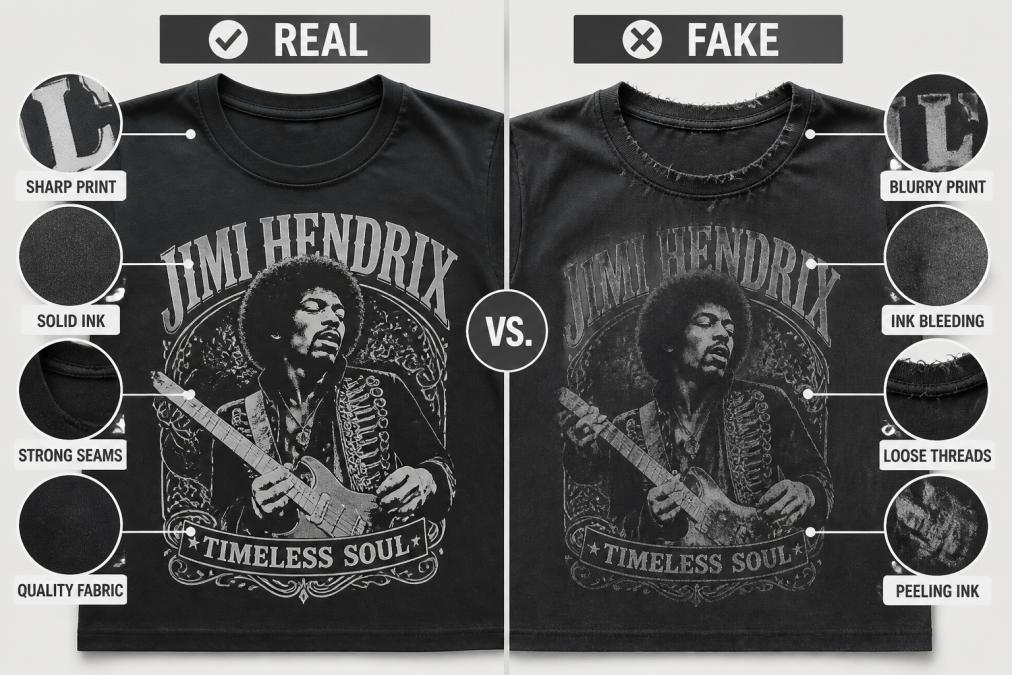
Print quality is the fastest way to spot a fake. Authentic band merchandise uses professional screen printing or high-quality direct-to-garment printing with sharp edges, consistent color saturation, and no bleeding visible in product photos. Counterfeit merchandise shows blurry edges where ink bleeds into surrounding fabric, uneven color coverage, and faded designs straight from the factory.
Legitimate band apparel uses heavier-weight cotton (typically 6-7 ounces) that feels substantial and durable. Bootleg merchandise uses thin, lightweight fabric that feels cheap immediately. Check product descriptions for fabric specifications, if the listing doesn't mention fabric weight or composition, that's a red flag.
Thread quality matters too. Authentic apparel shows even, tight stitching with consistent thread color. Cheap knockoff merchandise displays loose, uneven stitching, visible thread knots, or seams coming apart. The collar and cuffs are particularly telling, as they're the first places to fail on low-quality shirts.
Pricing Red Flags
Official band merchandise costs what it costs because of quality materials, proper licensing, and fair artist compensation. If a band t-shirt is priced significantly below market rate compared to the official band website or verified retailers, suspect a counterfeit.
Sellers offering band shirts at 50% below typical market value aren't running a charity, they're cutting corners on materials, avoiding licensing fees, and operating outside legitimate distribution channels. Compare prices across multiple legitimate sources. Official band websites, verified merchandise partners, and established retailers maintain similar price points because they're all paying for legitimate licensing and quality materials.
Watch for sellers using vague pricing language like "wholesale pricing" or "distributor prices." Legitimate wholesale purchases require business licensing and minimum order quantities, not individual consumer browsing.
Official Band Merchandise Websites and Verified Sellers
Finding authentic sources is your best defense against knockoff band merchandise. Official band websites typically have dedicated merchandise sections or links to authorized retailers. Major legitimate merchandise platforms carry officially licensed music apparel with proper licensing agreements and quality standards.
Check for official distribution partnerships listed on band websites and social media. If you're unsure whether a seller is legitimate, check the band's official channels first.
Tim Cosgriff Art delivers authentic vintage-inspired music apparel through direct-to-consumer sales, meaning you're buying directly from the source. Every graphic tee features iconic rock musicians with designs capturing classic rock culture. Our curated collection ensures each piece meets quality standards before reaching you.
Verify seller credentials before purchasing. Legitimate retailers display business information, customer reviews, return policies, and contact details prominently. They respond to customer inquiries professionally and maintain consistent communication. If a seller avoids sharing basic business information, that's a warning sign.
Understanding Copyright Laws and Band Merchandise
Copyright and trademark law protect band names, logos, and artwork from unauthorized use. Bands and their representatives hold copyright and trademark rights to their names, logos, album artwork, and band member likenesses. Official merchandise requires licensing agreements between the band and the merchandise manufacturer.
Counterfeit merchandise violates these protections. Sellers producing bootleg merchandise operate without permission or licensing. When you purchase counterfeit merchandise, you're supporting illegal operations with no legal recourse if the seller disappears with your money or merchandise arrives damaged.
Legitimate merchandise producers maintain proper licensing documentation and pay licensing fees to rights holders, ensuring that portion of your purchase supports the artist. This is why official merchandise costs more.
Red Flags in Online Product Listings
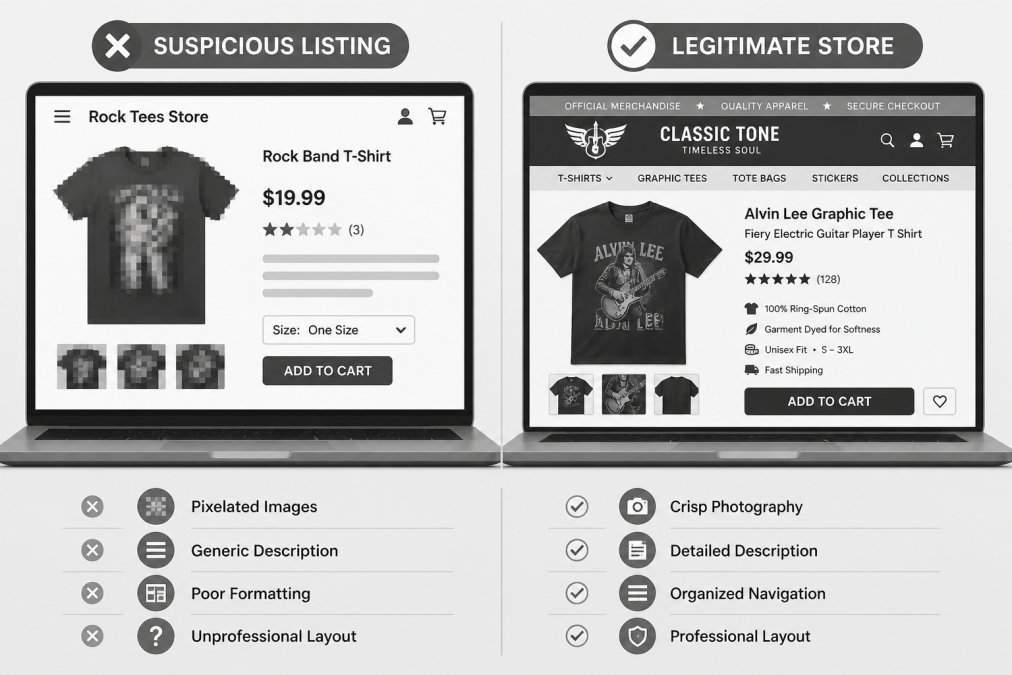
Poor product photography is a primary indicator of counterfeits. Counterfeit sellers often use low-resolution images, generic stock photos, or images stolen from legitimate retailers. Authentic sellers invest in professional product photography showing actual merchandise from multiple angles with proper lighting.
Generic product descriptions signal bootleg merchandise. Legitimate sellers provide specific details: fabric composition, care instructions, sizing information, and design inspiration. Counterfeit listings use vague, repetitive descriptions that could apply to any band shirt.
Unprofessional website design suggests counterfeit operations. Legitimate retailers display clear navigation, consistent branding, and polished presentation. Counterfeit sites often show poor grammar, inconsistent formatting, and cluttered layouts.
Suspicious seller information is a major warning sign. Legitimate retailers provide clear contact information and business registration details. Counterfeit sellers hide behind anonymous accounts or list vague business addresses.
Payment methods matter. Counterfeit sellers often accept only wire transfers, cryptocurrency, or untraceable payment methods. Legitimate retailers offer standard payment options with buyer protection. Counterfeit merchandise often ships from unexpected locations, check the shipping origin.
Customer reviews deserve scrutiny. Counterfeit sites either have no reviews or display obviously fake reviews with generic praise. Legitimate retailers display authentic customer feedback, both positive and negative, with specific comments about quality and shipping.
Safe Payment Methods and Seller Verification
Protect yourself financially by choosing payment methods that offer buyer protection. Credit cards and PayPal provide dispute resolution if merchandise arrives damaged, doesn't match the listing, or never arrives. Avoid payment methods offering no recourse like wire transfers, cryptocurrency, and direct bank transfers.
Verify seller legitimacy before entering payment information. Check online reviews on independent platforms. Search the seller's name alongside "scam" or "counterfeit." Contact the seller with questions, their responsiveness indicates legitimacy.
Look for security indicators on the website: SSL certificates (the padlock icon), privacy policies, and secure checkout processes. Check return policies carefully. Legitimate sellers offer clear return procedures and refund policies. Verify the seller's business address and contact information independently by searching on Google Maps and calling the phone number.
The Impact of Bootleg Merchandise on Artists
Bootleg merchandise represents direct financial loss for musicians at every level. Independent artists lose the most, depending on merchandise revenue to fund recording, touring, and promotion. Established artists lose revenue too, when fans purchase knockoff merchandise instead of official apparel, that money doesn't reach the artist's account.
The damage extends beyond immediate revenue loss. Counterfeit merchandise undermines the artist's brand. Cheap knockoff merchandise reflects poorly on the artist when fans receive low-quality products. Buyers blame the artist for poor quality, not realizing they purchased a counterfeit, damaging the artist's reputation and fan relationships.
Counterfeit operations also enable other illegal activities. Many operate as front businesses for money laundering or trafficking. Supporting legitimate merchandise means supporting the artist directly. When you purchase official band apparel or authentic vintage-inspired designs from legitimate retailers like Tim Cosgriff Art, your money goes toward the people creating the music you love.
Your Action Plan for Authentic Band Apparel
Protecting yourself from counterfeit merchandise requires a systematic approach.
Step 1: Start with official sources. Check the band's official website for links to authorized merchandise retailers.
Step 2: Verify seller legitimacy. Research the seller independently. Search for customer reviews on third-party platforms and check business information.
Step 3: Inspect product listings carefully. Review product photography for quality and detail. Read descriptions thoroughly for specific fabric information and sizing details.
Step 4: Examine design authenticity. Research the specific band shirt design to confirm it matches official releases.
Step 5: Use secure payment methods. Pay with credit cards or PayPal to ensure buyer protection.
Step 6: Document everything. Take screenshots of the product listing, seller information, and order confirmation.
Step 7: Inspect merchandise upon arrival. Examine the shirt immediately when it arrives. Check fabric quality, print quality, seams, and overall construction.
| Action | Purpose | Timeline |
|---|---|---|
| Verify official sources | Confirm seller legitimacy | Before purchasing |
| Research seller independently | Check reviews and credentials | Before purchasing |
| Inspect product listings | Identify counterfeit indicators | Before purchasing |
| Use secure payment | Ensure buyer protection | During checkout |
| Document everything | Create evidence trail | Throughout transaction |
| Inspect upon arrival | Confirm authenticity | Upon delivery |
Purchasing authentic band merchandise protects your investment and supports the artists you love. Bootleg merchandise might seem like a bargain, but cheap knockoff merchandise consistently disappoints through poor quality and the knowledge that your money funded illegal operations instead of supporting musicians. Tim Cosgriff Art delivers authentic vintage-inspired music apparel with the quality and integrity you deserve, graphic tees featuring iconic rock musicians designed for fans who refuse to settle for counterfeits. Get started with Tim Cosgriff Art and wear your music history with confidence, knowing your purchase directly supports the artists and the authentic craftsmanship behind every design.
Frequently Asked Questions
How can I tell if band merchandise is authentic or a knockoff?
Authentic band merchandise shows sharp, vibrant screen printing with consistent colors and no cracking or fading. Check the fabric weight, genuine apparel uses heavier, quality cotton. Verify the seller is officially licensed by visiting the band's official website or authorized retailers. Examine stitching quality, tag printing, and packaging. Bootleg items often have misspelled band names, blurry graphics, or cheap materials. Compare product photos on the official storefront with the seller's listing; counterfeit listings frequently use stolen or low-quality images.
Is it illegal to sell bootleg band merchandise?
Yes. Selling counterfeit band merchandise violates federal trademark and copyright laws. Under the Lanham Act, unauthorized sellers face civil penalties including fines up to $200,000 per violation, plus damages to the trademark owner. Criminal penalties can include imprisonment. The band or label holds intellectual property rights to the artist's name, likeness, and designs. If you encounter bootleg sellers, report them to the platform and the band's official management to protect artists and legitimate fans.
What are the signs of a low-quality screen print on band merchandise?
Look for cracking, peeling, or fading graphics after just a few washes. Poor screen printing shows fuzzy edges instead of sharp lines, uneven color saturation, and visible ink buildup or gaps. The print should feel smooth and flexible, not stiff or plasticky. Compare directly with officially licensed merchandise, quality screen printing maintains vibrant colors and detail through multiple wash cycles. Bootleg prints often use cheap ink that deteriorates quickly, making them obvious counterfeits within weeks of wear.
Where should I buy band merchandise to avoid fakes?
Purchase directly from the band's official website or authorized retailers listed on their site. Check the band's social media or contact their management for verified seller lists. Reputable retailers display official licensing badges and clear brand partnerships. Avoid third-party marketplaces with unverified sellers offering suspiciously low prices. Use secure payment methods like credit cards or PayPal, which offer buyer protection. Always verify the seller's contact information, return policy, and customer reviews before purchasing. Legitimate sellers provide detailed product photos, clear descriptions, and transparent shipping information.
This article was written using GrandRanker