
Table of Contents
- What You'll Need Before You Start
- How to Measure for Perfect Shirt Fit: Neck Size
- How to Measure Chest for T-Shirt Sizing
- Determining Sleeve Length and Shoulder Width
- How to Choose Band Shirt Sizes: Unisex vs Men's Fit
- Measuring Waist, Bicep, and Shirt Length
- Common Measuring Mistakes to Avoid
- Fabric Shrinkage and Fit Allowance
Last Updated: August 18, 2026
What You'll Need Before You Start
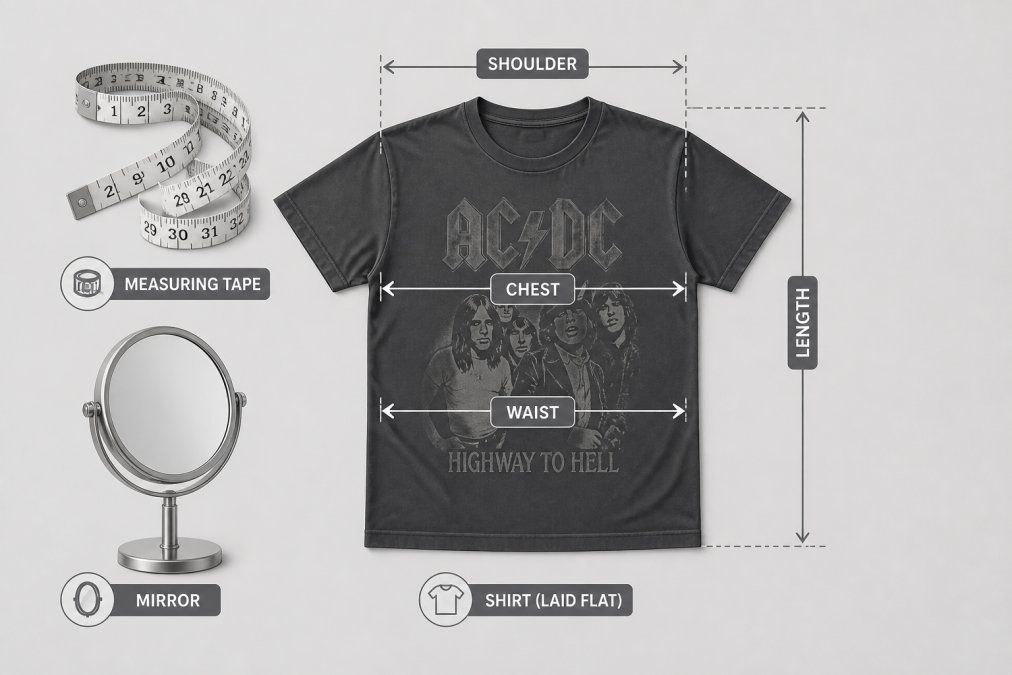
Getting accurate measurements requires a soft measuring tape, a mirror, and a well-fitting reference shirt. Stand in front of a mirror to monitor your posture throughout the process, slouching compresses your chest and shoulders, while standing too rigid inflates numbers.
Wear minimal layers when measuring, just a t-shirt. Keep a notepad or phone handy to record measurements immediately as you take them.
How to Measure for Perfect Shirt Fit: Neck Size
Wrap the measuring tape around your neck at the base, where a collar would naturally sit. Keep the tape snug but not tight, you should be able to slip one finger comfortably under it. The tape should sit parallel to the ground.
For most people, neck size ranges from 14 to 18 inches. If you're between sizes, round up slightly. A neck that's slightly loose is more comfortable than one that's restrictive.
How to Measure Chest for T-Shirt Sizing
Measure at the fullest part of your chest, directly across the nipple line. Wrap the measuring tape around your body horizontally, keeping it parallel to the ground. The tape should be snug enough to stay in place but loose enough that you can slide a flat hand under it comfortably.
Stand naturally without puffing out or sucking in your chest. Take the measurement at least twice to verify consistency. Most people fall between 36 and 46 inches in chest circumference. If you're between sizes, consider your preference for fit tightness.

Determining Sleeve Length and Shoulder Width
Sleeves are measured from the shoulder seam down to the wrist bone, not from the center of the chest. Keep your arm relaxed at your side, don't stretch it out or bend it.
Shoulder width is measured from shoulder seam to shoulder seam across the back. Have someone help with this if possible, or use your mirror to ensure the tape stays level. Most people have sleeve lengths between 30 and 35 inches, with shoulder widths between 16 and 20 inches.
How to Choose Band Shirt Sizes: Unisex vs Men's Fit
Band merchandise comes in two primary fit profiles: unisex and men's tailoring. Understanding the difference is essential for how to choose band shirt sizes.
Understanding Unisex vs Men's Sizing
Unisex shirts are cut with a straight silhouette from shoulder to hem with minimal tapering at the waist. This makes unisex fit work well for people who prefer a relaxed, vintage aesthetic.
Men's fit shirts taper slightly at the sides and have a more structured shoulder, designed for a broader shoulder-to-waist ratio. If you have a standard men's frame, men's fit will feel more natural and tailored.
Consider your body type and style preference when choosing between these options. A person with a broader chest and narrower waist typically prefers men's fit because the tapering creates definition. Someone who prefers a looser, more oversized look gravitates toward unisex.
Measuring Waist, Bicep, and Shirt Length
Measure your waist at the narrowest point around your midsection, typically about an inch above your hip bones. Keep the tape parallel to the ground with relaxed posture. This dimension determines how the shirt will drape across your midsection.
Bicep circumference is measured around the fullest part of your bicep with your arm relaxed at your side. Most people range from 10 to 16 inches.
Shirt length is measured from the back of the neck down to the hem. Most shirt lengths range from 26 to 32 inches depending on your torso length. For vintage band merchandise, slightly longer lengths are more authentic to the original aesthetic.
Common Measuring Mistakes to Avoid
The tape-too-tight mistake ruins more measurements than any other error. Tight tape compresses your body and creates false readings. Your measurements should reflect how your body actually exists in space.
Another frequent error is measuring with poor posture. Slouching rounds your shoulders and compresses your chest by up to an inch. Stand naturally, as you would during a normal day.
Inconsistent tape placement throws off results. If you measure your chest one inch higher than your actual fullest point, you'll get a smaller number. Mark your reference points if needed.
Many people measure over clothing. Measure directly against your skin or wear only a thin base layer.
Fabric Shrinkage and Fit Allowance
Most cotton and cotton-blend fabrics shrink between 3 and 5 percent with standard washing and drying. For a shirt with a 40-inch chest, that's 1.2 to 2 inches of shrinkage.
When you measure for perfect shirt fit, add a half inch to your chest measurement if you plan to machine wash and dry your shirts regularly. If you hand wash or air dry, shrinkage is minimal, add only a quarter inch.
Different fabrics behave differently. 100 percent cotton shrinks more than cotton-polyester blends. Heavier-weight fabrics shrink less than lightweight ones. Washing temperature matters too, hot water causes more shrinkage than cold water. If you wash in cold water and air dry, your vintage band tee will maintain its fit much longer.
Getting how to measure for perfect shirt fit right transforms your shopping experience. When you understand your measurements, neck, chest, sleeve length, shoulder width, waist, and shirt length, you know exactly what will work before you order.
The key is measuring accurately and accounting for how you'll actually care for the shirt. A half inch of allowance for shrinkage, consistent tape placement, and natural posture during measurement give you results you can trust. Tim Cosgriff Art's vintage-inspired band merchandise is designed to fit well when you measure properly and choose the right fit profile for your body type.
Frequently Asked Questions
Should I measure my body or a shirt I already own?
Measure your body for the most accurate starting point. Stand in front of a mirror in your normal posture while breathing naturally, then use your measurements to compare against the brand's size chart. If you own a shirt that fits well, you can measure it as a reference, measure it laid flat across the chest width, shoulder seam to seam, and sleeve length from the shoulder seam to the cuff. This helps you understand how much allowance you prefer, but your body measurements are the foundation.
How do I know if a shirt fits correctly?
A properly fitting shirt should allow one to two fingers of space between the fabric and your body at the chest and waist. The shoulder seam should sit right at the edge of your shoulder bone, not hanging down your arm. Sleeves should end between your wrist bone and the base of your thumb. The shirt length should reach your hip or slightly below. You should be able to move your arms freely without the fabric pulling, and there should be no bunching or excess fabric around your midsection.
Does shirt sizing vary between brands?
Yes, sizing varies significantly between brands, which is why body measurements matter more than relying on a single size label. A medium from one brand may fit differently than a medium from another due to different fit profiles, fabric choices, and manufacturing standards. Always check the specific brand's size chart and compare it to your actual body measurements. This is especially important with vintage-inspired designs, which sometimes use different cut standards than modern athletic or contemporary styles.
What allowance should I add to my body measurements for a comfortable fit?
For a comfortable, classic fit, add 2 to 4 inches to your chest measurement and 1 to 2 inches to your waist measurement. This allowance gives you room to move without the shirt clinging to your body. If you prefer a more fitted look, use the lower end of that range. If you like a looser, relaxed fit, go toward the higher end. Keep in mind that graphic tees often look best with a bit of breathing room, and vintage-inspired designs typically favor a more relaxed silhouette than modern fitted cuts.
This article was written using GrandRanker