
Table of Contents
- Why Band Shirt Sizing Varies Across Brands
- How to Measure a Band Shirt for Accurate Sizing
- Understanding Retail Fit vs Classic Fit in Band Tees
- Do Band Shirts Shrink and How to Account for It
- Using a Band Merch Size Chart to Place Accurate Orders
- Accounting for Size Distribution When Ordering Merchandise
- Common Sizing Mistakes to Avoid
- Conclusion
Last Updated: August 12, 2026
Why Band Shirt Sizing Varies Across Brands
Band shirt sizing inconsistency frustrates online shoppers because there's no universal sizing standard in the apparel industry. Each brand sets its own specifications for chest width, body length, and sleeve measurements. Manufacturers use different base garments called blanks, which vary dramatically in dimensions. Some brands intentionally cut shirts oversized for a vintage aesthetic, while others tailor for a fitted silhouette. Screen printing and graphic placement also affect how a shirt sits on your body.
Understanding these variations is the first step toward finding consistent band shirt sizing that works for your body type. At Tim Cosgriff Art, we recognize that rock music fans want apparel that fits reliably. The key is learning how to measure garments properly and understanding the factors that influence fit across different manufacturers.
How to Measure a Band Shirt for Accurate Sizing
Proper measurement is the foundation of finding consistent band shirt sizing. Lay a shirt that fits you well on a flat surface and smooth out wrinkles. You'll need a soft measuring tape, the kind used in sewing, which conforms to fabric without distorting the measurement.
Measuring Chest Circumference and Armpit to Armpit
The chest circumference measurement, often called armpit to armpit, is the most critical dimension for band shirt fit. Place your measuring tape horizontally across the shirt about one inch below the armpit seam. Measure from the left armpit seam to the right armpit seam, then double that number to get the full chest circumference.
For example, if armpit to armpit measures 20 inches, the full chest circumference is 40 inches. Most people prefer 2-4 inches of ease, meaning the shirt should measure 2-4 inches larger than their actual chest measurement. If your chest is 38 inches, you'd want a shirt measuring 40-42 inches armpit to armpit.
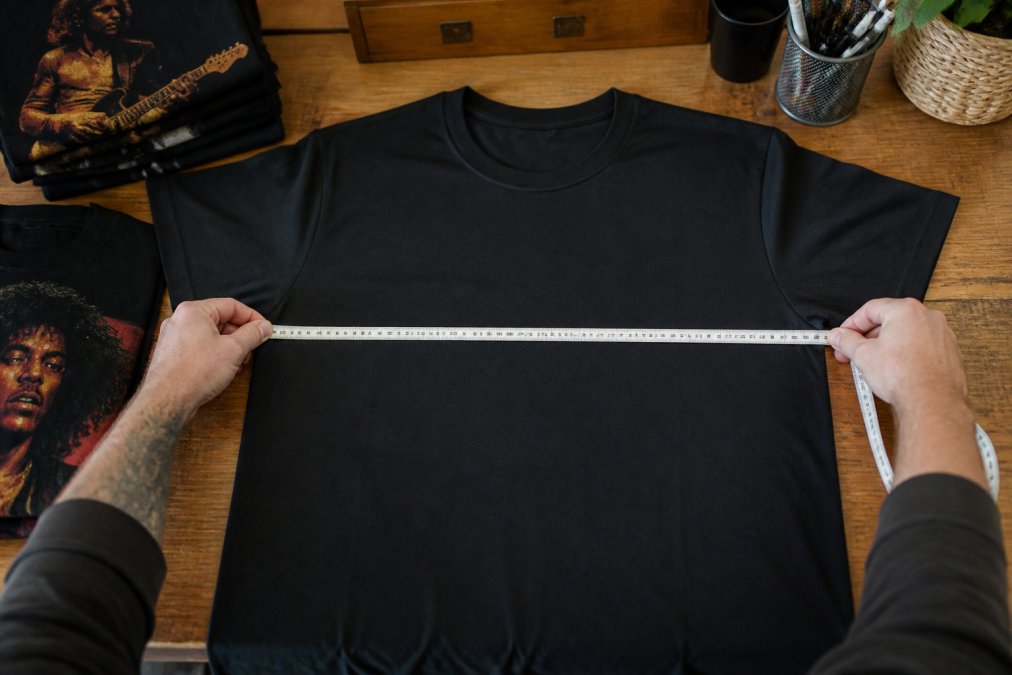
Record this measurement for every shirt you try on. Some vintage-inspired band merch is cut with extra room, measuring 44-48 inches armpit to armpit even in medium sizes, while others are more tailored at 38-42 inches for the same size designation.
Measuring Body Length and Shoulder Width
Body length is measured from the highest point of the shoulder seam down to the hem. Place your measuring tape at the back neckline where the shoulder seam begins, then run it straight down to the bottom of the shirt. Shoulder width measures the distance from one shoulder seam to the other across the back by measuring seam-to-seam on the laid-flat shirt.
For band shirt sizing, body length becomes increasingly important if you're on the taller or shorter side. A standard medium might measure 28 inches long, which works for average heights but could be too short for someone 6'2" or too long for someone 5'4". Heavyweight garment-dyed tees sometimes run slightly shorter due to fabric weight and construction method.

Understanding Retail Fit vs Classic Fit in Band Tees
Retail fit, also called contemporary fit, is more tailored and closer to the body with less ease and tapered sleeves. Classic fit, sometimes called regular or boxy fit, offers more room through the chest, shoulders, and body with 4-6 inches of ease. Classic fit band merch has the relaxed aesthetic of vintage concert tees from the 1980s and 1990s.
The choice depends on your personal preference and body type. Slimmer builds might prefer retail fit for balanced proportion, while larger frames often find classic fit more comfortable. Tim Cosgriff Art's vintage-inspired designs are typically offered in classic fit styles, honoring authentic band merchandise aesthetics while ensuring comfort across different body types.
When shopping for band shirt sizing, always check whether the listing specifies the fit style. A medium in retail fit will feel noticeably tighter than a medium in classic fit from the same brand. If you've had good experiences with classic fit band shirts, stick with that fit style and measure the armpit-to-armpit width to ensure consistency.
Do Band Shirts Shrink and How to Account for It
Shrinkage is one of the most overlooked factors in band shirt sizing. Most cotton band shirts will shrink somewhat during washing and drying, particularly if they're not pre-shrunk.
Fabric Weight and Pre-Shrunk Materials
Heavyweight band shirts, typically made from 6.1-7.0 ounce cotton, shrink less than lightweight options because the denser fabric is more stable. Lightweight shirts under 5.5 ounces can shrink 3-5% in both length and width if washed in hot water and dried on high heat. Pre-shrunk materials have been treated during manufacturing to minimize shrinkage to 2-3% or less.
Pure 100% cotton shrinks more than cotton blends. A 50/50 cotton-polyester blend might shrink only 1-2%, while 100% ring-spun cotton could shrink 3-5%. Garment-dyed tees, which are dyed after construction, often experience slightly more shrinkage because the dyeing process can loosen fibers.
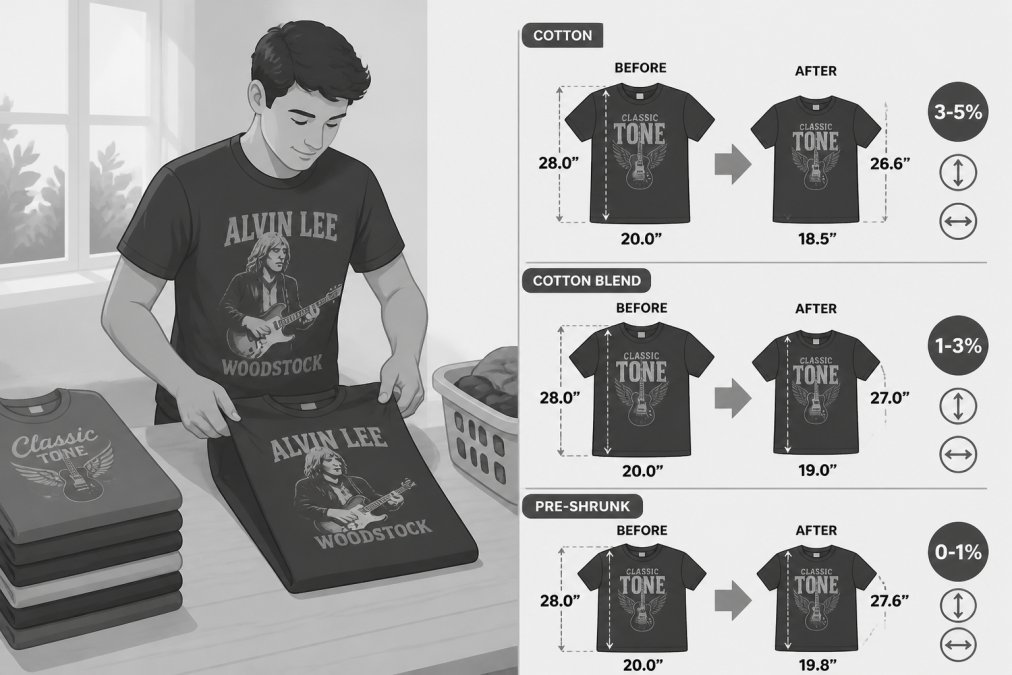
If you're ordering band merch that isn't pre-shrunk, consider sizing up slightly to account for expected shrinkage. A shirt measuring 42 inches armpit to armpit might shrink to 40 inches after washing.
Washing and Drying Guidelines to Minimize Shrinkage
Washing in cold water and air-drying preserves size better than any other method. Hot water accelerates shrinkage, and high-heat dryer settings make it worse. Turn your shirt inside out before washing to protect the graphic design. Use gentle detergent and avoid bleach, which weakens cotton fibers and contributes to shrinkage.
For band shirts that have already shrunk, soaking in lukewarm water with fabric conditioner and gently stretching while wet can recover a small amount of size, but don't expect dramatic results. The best approach is preventing shrinkage from the start through proper care.
Using a Band Merch Size Chart to Place Accurate Orders
A band merch size chart is only as useful as the measurements it contains. Before relying on any size chart, verify that it lists actual garment measurements, chest width, body length, and shoulder width, rather than just generic size labels.
When you're ready to order band merch, compare your personal measurements against the size chart's specifications. If your chest is 40 inches and you prefer 2 inches of ease, look for a size that measures 42 inches armpit to armpit. Cross-reference body length and shoulder width too.
Tim Cosgriff Art provides detailed size specifications for each design so you can make informed decisions. Rather than assuming a medium will fit, you can reference the actual measurements and compare them to your personal reference sheet. Keep a screenshot or printed copy of size charts for brands you order from frequently, as consistency across a brand's catalog isn't guaranteed.
Accounting for Size Distribution When Ordering Merchandise
If you're ordering band merch for an event, concert, or group gift, understanding size distribution is critical. Most people don't fit into a single size, and your audience spans small through extra-large.
Start by surveying your audience about their typical shirt size and fit preferences. If you can't survey directly, assume a distribution of roughly 15% small, 35% medium, 35% large, and 15% extra-large as a baseline. Adjust based on what you know about your group's demographics.
When placing orders, consider ordering slightly more of the middle sizes since those sell fastest. However, don't neglect the extremes, having a few extra-small and extra-large options ensures everyone feels included. If you're uncertain about final quantities, many suppliers allow you to adjust orders within a certain window before production begins.
Common Sizing Mistakes to Avoid
The most common mistake is ignoring fit style entirely. Always verify the fit style and measure the actual garment dimensions before committing to a purchase. Another frequent error is assuming all mediums are created equal, band shirt sizing varies dramatically between manufacturers and even between different blanks from the same company.
People also underestimate shrinkage, ordering a shirt that fits perfectly only to have it shrink after the first wash. If you're buying band merch that isn't pre-shrunk, factor in expected shrinkage when choosing your size. Failing to account for graphic placement is another oversight, a large graphic can make a shirt appear tighter than it actually is.
Finally, many people don't keep records of what fits them well. Without a personal reference sheet of preferred measurements, you're starting from scratch with every purchase. Document your ideal chest circumference, body length, and shoulder width, this reference becomes invaluable when shopping across different brands and styles.
Conclusion
Finding consistent band shirt sizing requires measuring garments accurately, understanding fit variations between brands, and accounting for shrinkage and size distribution. By comparing your personal measurements against detailed size charts and choosing the right fit style, you eliminate most sizing surprises.
Tim Cosgriff Art offers vintage-inspired graphic tees with clear sizing specifications so you can order with confidence. Whether you're buying a single shirt to express your passion for classic rock or ordering merch for an event, measuring properly and understanding the factors that influence fit ensures you'll get apparel that feels right. Start building your personal sizing reference today, and you'll never second-guess band shirt sizing again.
Frequently Asked Questions
Are band shirts typically true to size or do they run small?
Band shirt sizing depends on the manufacturer and blank supplier. Some run true to size, while others run small or large. Always check the specific band merch size chart for the brand you're ordering from. Garment-dyed tees like those from Comfort Colors tend to fit slightly roomier than standard retail fits. Measure your reference garment and compare it directly to the manufacturer's specifications rather than assuming sizing.
How do I measure my chest to find the right shirt size?
Lay a t-shirt that fits you well flat on a table. Measure straight across from armpit to armpit, then double that number for full chest circumference. Use a soft measuring tape and keep it flat against the fabric, don't pull tight. Compare this measurement to the garment's specs. For band merch, also measure body length from the shoulder seam to the hem to ensure the shirt won't be too short or too long.
Do band shirts shrink, and how much should I account for it?
Most band shirts shrink 3-5% with standard washing and drying, though some cotton blends shrink more. Pre-shrunk materials reduce this risk significantly. To minimize shrinkage, wash in cold water and air-dry or use low heat. If you're ordering band merch in bulk, factor in 1-2 sizes larger for expected shrinkage, especially if customers will use hot water. Always check the fabric composition and care instructions on the size chart.
What is the difference between retail fit and classic fit in band tees?
Retail fit is tailored closer to the body with narrower sleeves and a slimmer cut through the torso. Classic fit offers a roomier, more relaxed silhouette with wider sleeves and extra length. Band tees often use classic or boxy fit to match vintage aesthetics and allow for comfortable layering. When ordering merchandise, clarify which fit your blank supplier uses, this dramatically affects how sizes map to actual customer measurements and satisfaction.
This article was written using GrandRanker